
Last updated September 23, 2026
Whole-system duct and dryer vent check with before-and-after photos - you see exactly what came out of your vents
That "$99 whole-house special" is a bait ad - the real number appears once they are in your hallway, or the "clean" is a shop-vac at the register. We photograph the inside of your ducts before and after instead.
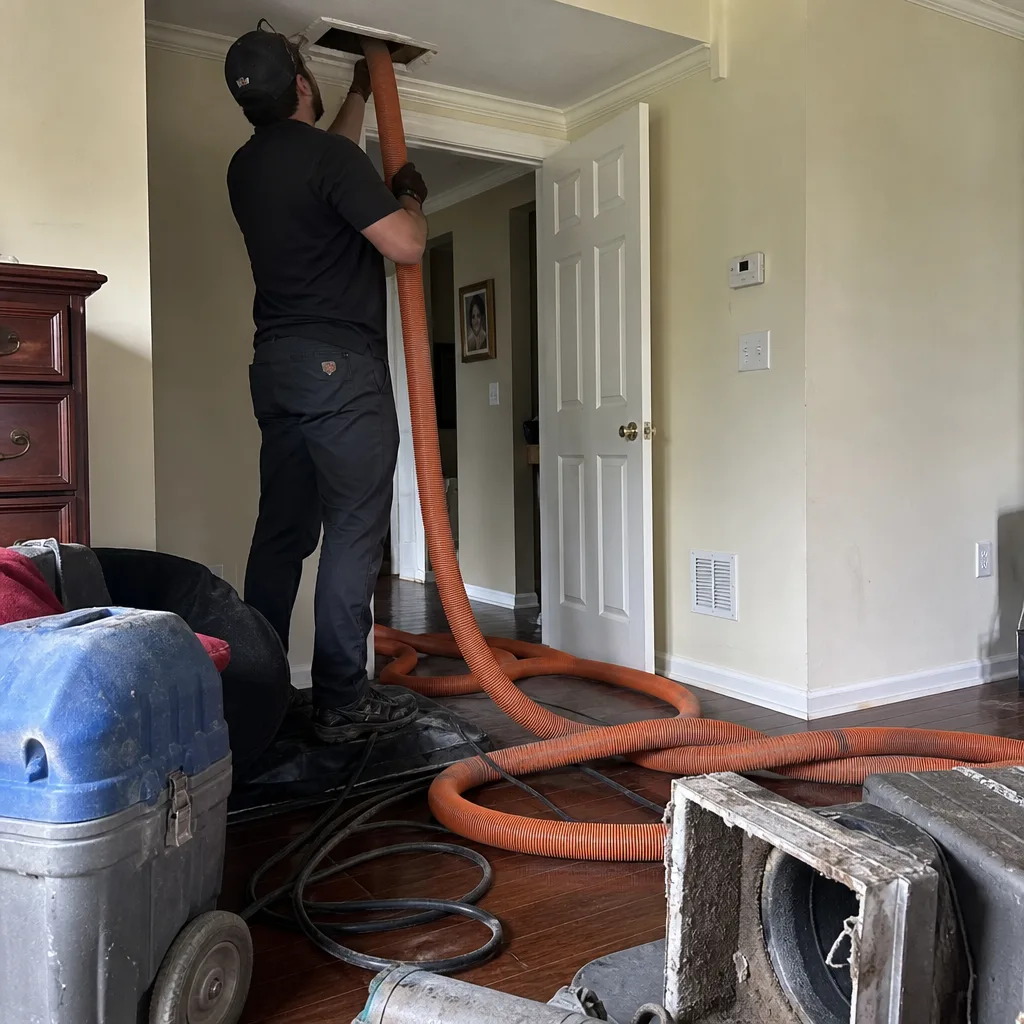 Before
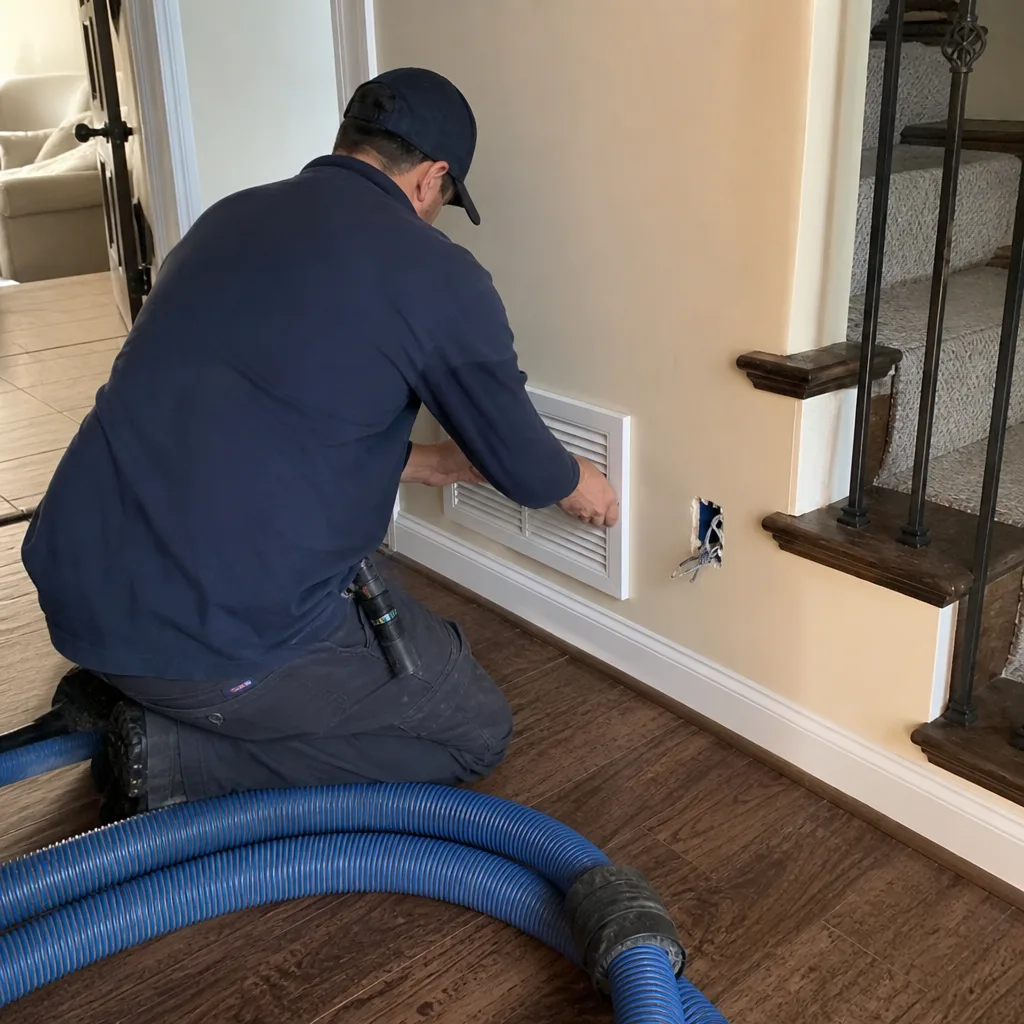 After
After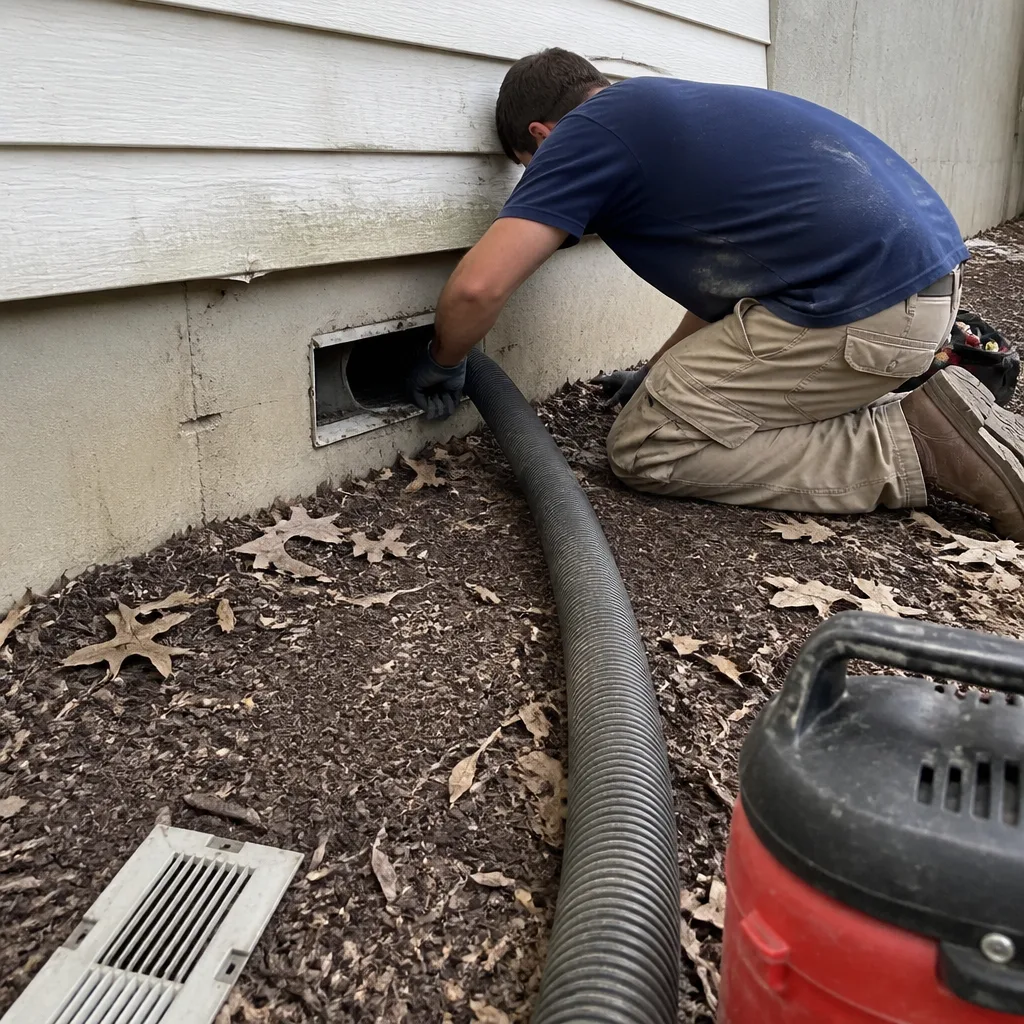 Before
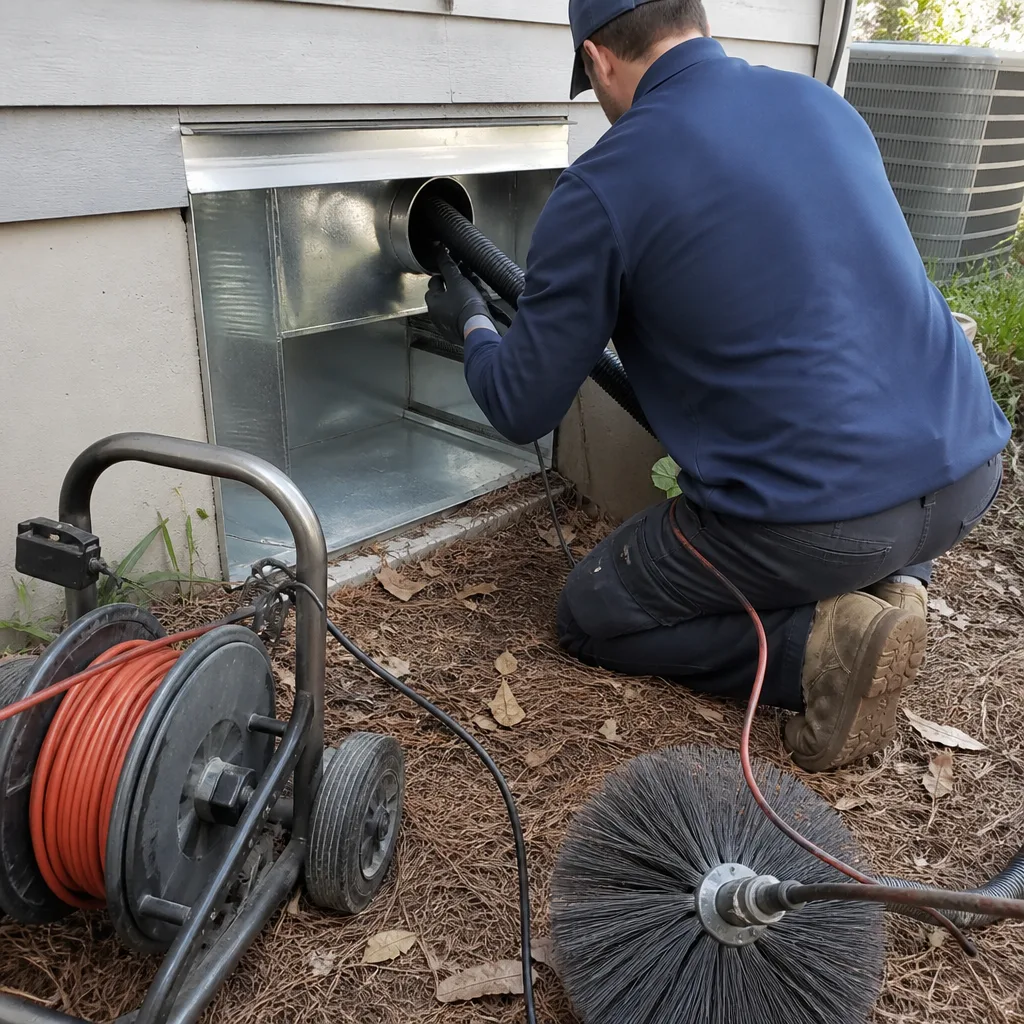 After
After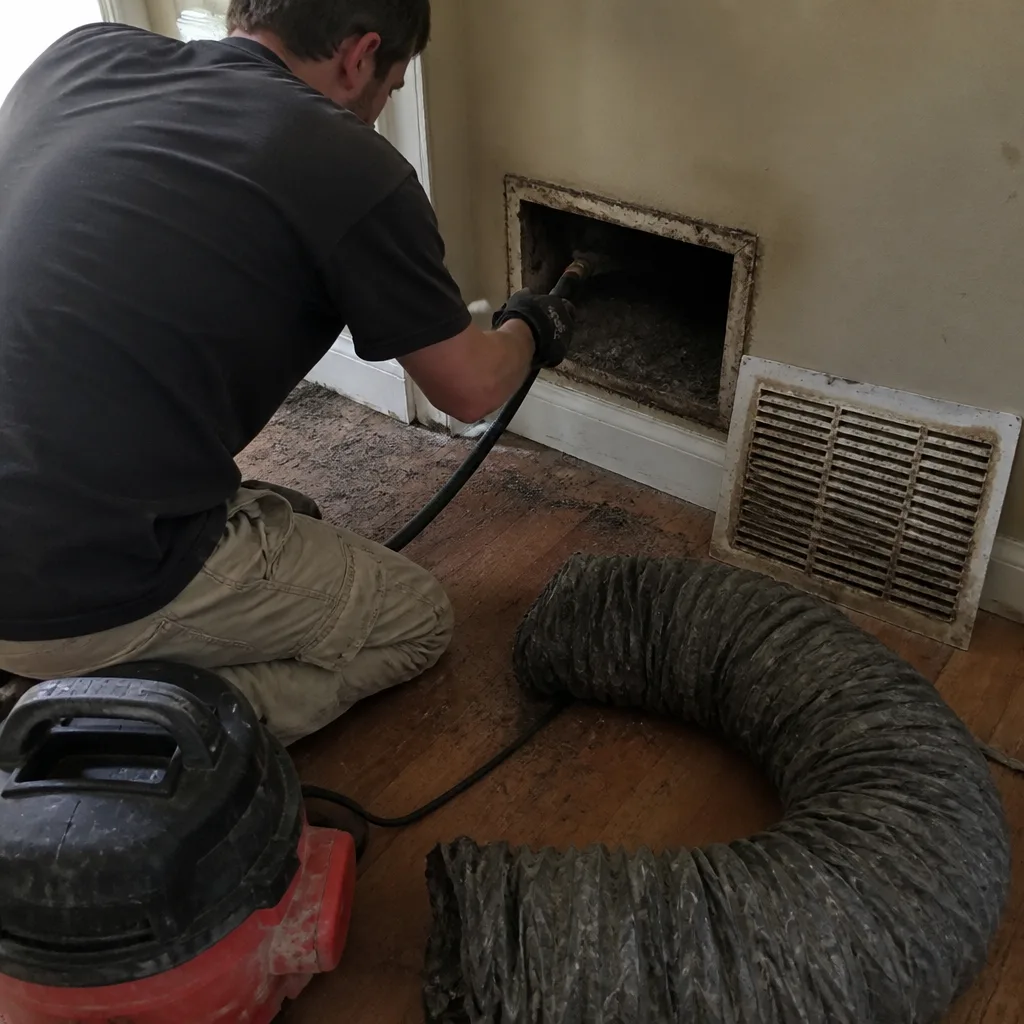 Before
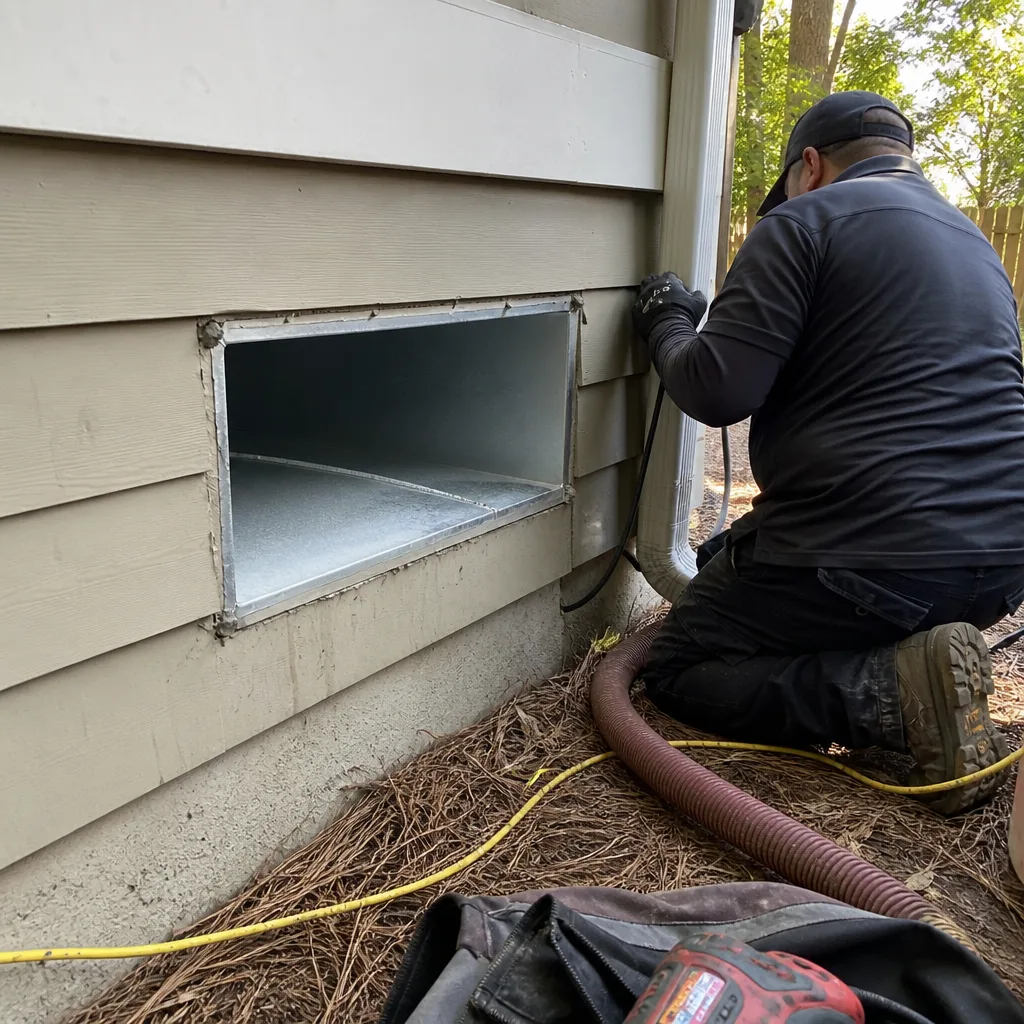 After
AfterAir Duct Cleaning Maintenance Checklist for Cumming Homeowners
The single most predictive sign that your ducts need attention isn’t visible at the register. It’s a half-inch of dust on the back side of the filter rack, the surface homeowners almost never think to inspect. In Cumming, where Forsyth County’s heavy pine pollen season dumps microscopic debris from March through April, that hidden surface tells the real story of what’s circulating through your home. This guide gives you a 20-minute room-by-room inspection you can perform without tools, plus the specific seasonal triggers and measurable thresholds that separate “monitor” from “call this week” for Air Duct Cleaning.
Quick Answer
A complete air duct maintenance checklist for Cumming homeowners includes: inspecting the hidden back side of your filter rack for dust accumulation, checking register airflow and visible debris at every grille, documenting baseline photos for comparison, adjusting filter changes to 30-45 days during pollen season, and knowing three measurable thresholds that require professional attention. Perform this inspection twice yearly, in late April after pollen peaks and late September before heating season.
Table of Contents
- Why Visual Inspection Matters More Than Calendar Schedules
- The 20-Minute Room-by-Room Inspection Sequence
- Seasonal Triggers Specific to Forsyth County
- Documenting Baseline Conditions with Your Phone Camera
- Filter Change Intervals That Actually Work in Cumming
- Three Conditions That Move “Monitor” to “Call This Week”
- What Professional Equipment Actually Does (And What It Doesn’t)
- Common Mistakes to Avoid
- When to Call a Professional
- Frequently Asked Questions
BeforeAfterWhy Visual Inspection Matters More Than Calendar Schedules
The industry default advice, “clean your ducts every 3 to 5 years,” is a statistical average with no connection to your specific home. We’ve documented homes in Cumming’s newer subdivisions like Brookwood and Vickery Village that showed significant accumulation at 18 months, and others in established neighborhoods near downtown that remained clean at 6 years. The difference isn’t random. It’s driven by four variables the calendar cannot see: construction activity nearby, pet density, filter maintenance discipline, and the specific pollen load of a given spring.
A visual inspection protocol catches these variables in real time. It also protects you from the inverse problem: paying for unnecessary cleaning. The $79 coupon model depends on volume, not accuracy. A technician with a quota and a shop vacuum has every incentive to declare any ductwork “dirty.” Your own documented observations create a baseline that makes such claims verifiable.
The inspection we describe below requires no tools, no ladder beyond what you already use for routine tasks, and no technical knowledge. What it does require is looking in places the average homeowner ignores, and recording what you find with enough specificity to compare against future conditions.
CleanRun’s documented photo record on every Air Duct Cleaning in Cumming exists because we’ve learned that memory is unreliable and verbal descriptions are worse. A photo of debris at a duct elbow, dated and labeled, removes all ambiguity about whether conditions have changed. You can build the same discipline with your phone.
The 20-Minute Room-by-Room Inspection Sequence
Perform this sequence in the same order every time. Consistency prevents skipped steps and builds a repeatable record. We recommend starting at the thermostat and working outward, following the airflow path.
Step 1: Filter Rack Inspection (5 minutes)
- Turn off the HVAC system at the thermostat. Wait for blower cessation.
- Remove the filter. Note the install date you’ve written on the frame.
- With a flashlight, inspect the back side of the filter rack, the surface the filter seals against. This is the surface almost never checked. Look for a visible dust layer, typically gray or brown, that wipes off with a finger.
- Photograph this surface. Include the filter frame in frame for scale and date reference.
- Inspect the filter itself. Light should pass through the media with moderate resistance. A completely opaque filter is past due. Note any deformation, moisture staining, or mold-like spotting.
The back-side dust measurement is your primary indicator. A thin film, less than 1/16 inch, is normal accumulation. A measurable layer, 1/8 inch or more, indicates the filter has been overloaded or bypassing air around its edges. In Cumming’s spring pollen period, we’ve seen this layer build to 1/2 inch in homes with standard 1-inch filters and outdoor pets.
Step 2: Return Air Grille Inspection (5 minutes)
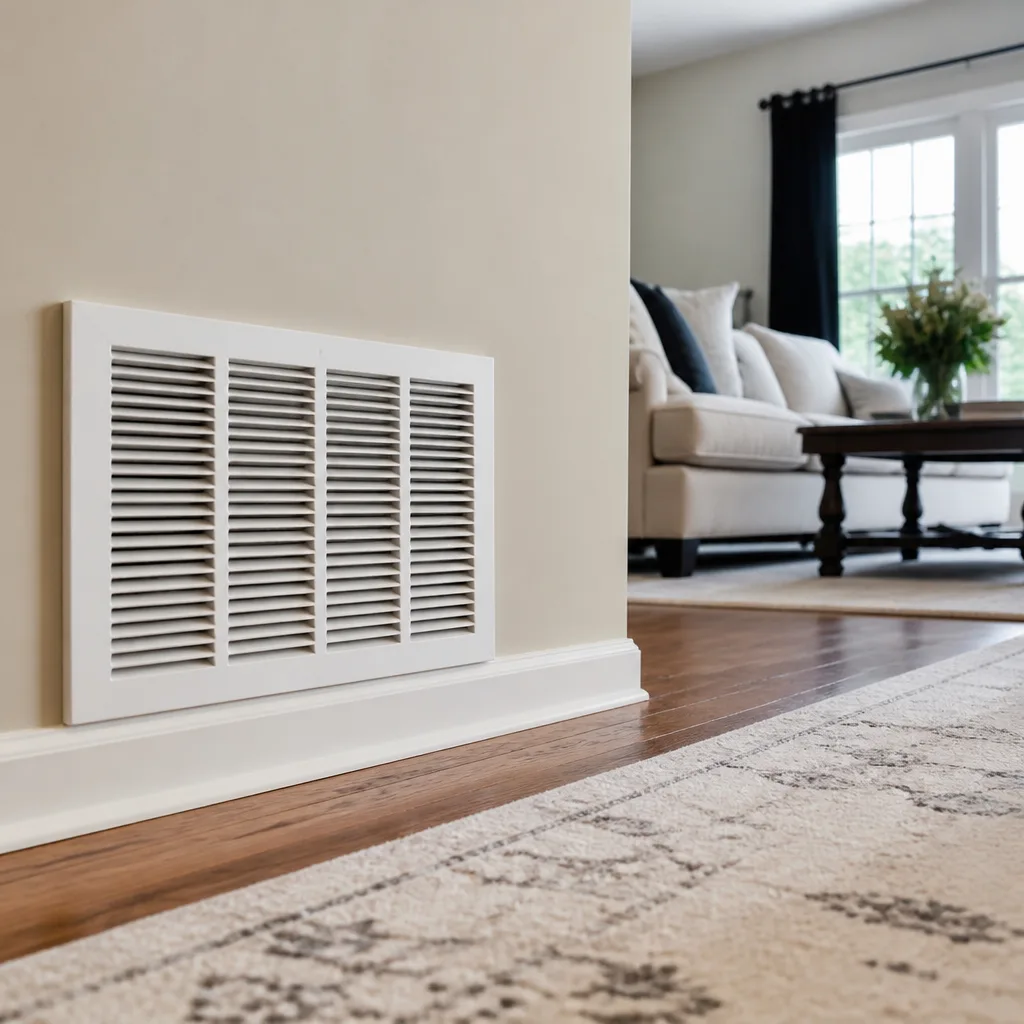
- Locate all return air grilles, typically larger than supply registers and often in hallways or central rooms.
- Remove the grille if it has spring clips or screws. Most residential grilles lift off with gentle pressure.
- Inspect the visible ductwork behind the grille with flashlight. Look for:
- Debris accumulation on duct walls, measured against your previous photo
- Any fibrous or fuzzy growth, distinct from smooth dust
- Insect or rodent evidence: droppings, nesting material, or grease marks
- Moisture staining or corrosion on metal surfaces
- Photograph the same angle each time. Grille removal reveals the plenum, the main collection box where return air converges before reaching the blower.
Step 3: Supply Register Inspection (7 minutes)
- Visit every supply register in the home. Bedrooms, bathrooms, and the main living area each have independent runs, the individual duct branches serving that room.
- With the system running, hold a tissue or light ribbon 6 inches below the register face. Note the deflection angle and consistency. Weak airflow at one register, when others are strong, indicates blockage or disconnection in that specific run.
- With system off, remove register covers and inspect the boot, the short transition piece connecting duct to room. This is where debris often accumulates visibly.
- Photograph each boot from the same angle. Date and label by room.
Step 4: Exterior Equipment Check (3 minutes)
- Inspect the condensate drain line for blockage or algae growth. In Cumming’s humid July and August, a clogged drain can back moisture into the system.
- Verify outdoor unit clearance: 2 feet minimum on all sides, no vegetation encroachment.
- Note any new construction, road work, or landscaping activity within 200 feet. These generate particulate load that accelerates indoor accumulation.
This 20-minute sequence, performed twice yearly, generates more actionable information than any calendar recommendation. The CleanRun Air Duct Cleaning Cumming home team uses a professional-grade version of this same protocol before recommending any service scope.
Seasonal Triggers Specific to Forsyth County
Cumming’s location at the intersection of the Piedmont and the lower Appalachians creates distinct seasonal patterns that affect ductwork differently than coastal or purely inland Georgia. Homeowners who understand these patterns can anticipate problems rather than react to them.
March-April: Pine Pollen Accumulation
Forsyth County’s loblolly and shortleaf pine forests release pollen that coats outdoor surfaces in visible yellow film. What enters your home through doors, windows, and fresh-air intakes is finer than the visible dust. It reaches the filter rack in concentrations that standard 90-day filters cannot handle.
Our documented records from Cumming homes show filter loading rates 3-4 times normal during peak pollen weeks. The visual indicator: a filter installed in early March that appears clean in mid-March but is fully loaded by early April. The maintenance response: inspect filters every 2 weeks during this period, not monthly. Replace when light transmission drops by half, not when the filter appears “dirty” to casual inspection.
July-August: Humidity and Mold Indicators
Cumming’s July dew points regularly reach 70°F, creating conditions where ductwork in unconditioned attics or crawl spaces can drop below the surrounding air temperature. When supply ducts run through 130°F attics, the temperature differential at insulation gaps causes condensation. Where moisture meets settled organic debris, microbial growth follows.
The homeowner-visible signs appear at registers: dark spotting on the boot or grille back side, a musty odor when the system first cycles on, or visible fuzz on metal surfaces that differs in texture from ordinary dust. These are not emergencies, but they are thresholds. Document with photos and schedule professional evaluation within 2-3 weeks. Extended delay risks distribution of spores throughout the home.
October: Heating-Season Burn-Off
The first sustained heating cycle of autumn produces a characteristic odor as dust that settled on heat exchanger surfaces during the off-season burns off. This is normal and typically dissipates within hours. What is not normal: a persistent acrid smell, visible smoke or haze from registers, or the odor of burning plastic or electrical insulation.
These indicate conditions beyond dust accumulation: debris in contact with the heat exchanger, a failing component, or foreign material in the ductwork. Turn off the system and call for evaluation. CleanRun’s HVAC Cleaning in Cumming service addresses heat exchanger and blower compartment conditions that duct-only cleaning cannot reach.
January: Post-Holiday Pet Dander Load
Cumming households with indoor pets see measurable filter loading acceleration in January, after holiday hosting and reduced outdoor activity concentrate dander and hair in the system. The inspection protocol above, performed in mid-January, typically reveals the year’s heaviest filter rack accumulation.
Documenting Baseline Conditions with Your Phone Camera
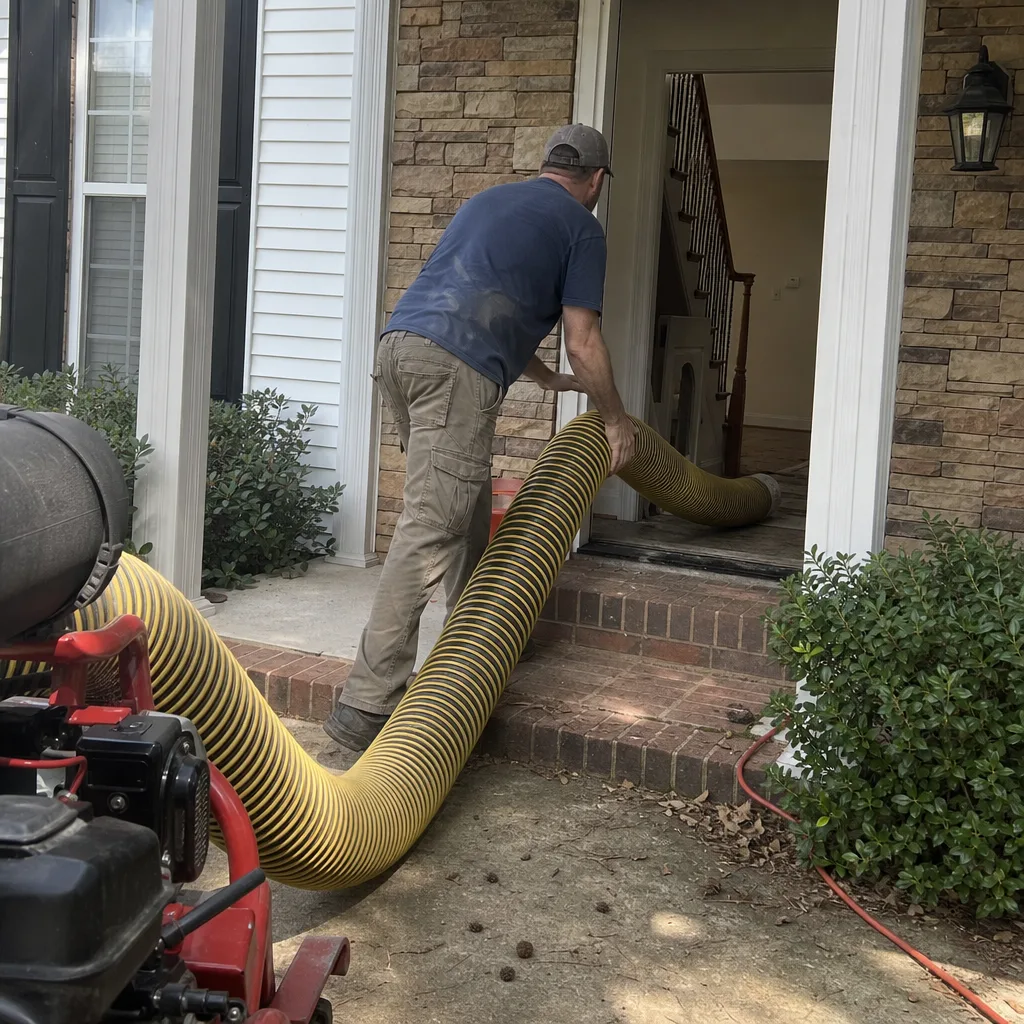
A photo record transforms subjective impressions into comparable data. Without it, “it looks about the same” is the best you can offer. With it, you can measure accumulation rates, identify sudden changes, and verify any professional’s claims about your system’s condition.
Minimum Documentation Protocol
- Filter rack, back side: Flashlight held at 45 degrees to show texture and depth. Include a ruler or coin for scale.
- Return plenum: Grille removed, camera positioned to show 2-3 feet of visible duct. Same angle every time.
- Supply boot, master bedroom: Representative of typical bedroom load. Master typically has highest occupancy hours.
- Supply boot, main living area: Highest airflow volume, often shows accumulation fastest.
- Exterior condensate line and unit: Context for seasonal conditions.
Store these in a dedicated album, labeled with date and HVAC runtime hours if your thermostat tracks them. Before hiring any duct cleaning service, review our Air Duct Cleaning Permits, Codes & Inspections in GA: What You Need to Know, then compare your most recent photos against the technician’s claims. A legitimate professional will welcome this comparison. A technician who discourages your documentation or claims conditions you cannot verify should be questioned.
CleanRun’s documented photo record on every visit, included as a standard deliverable since 2013, extends this same principle to professional service. Every duct run, before and after, photographed and delivered. Customers who maintain their own baseline records can verify our work against their historical conditions, not against our claims.
Filter Change Intervals That Actually Work in Cumming
Manufacturer recommendations assume average conditions. Cumming’s conditions are not average. The combination of heavy spring pollen, summer humidity, and active construction in growing subdivisions like those along GA-400 creates particulate loads that generic guidance underestimates.
Base Intervals by Household Type
| Household Profile | Standard Season | Pollen Season (Mar-Apr) |
|---|---|---|
| No pets, no nearby construction, 1-2 occupants | 60-90 days | 45-60 days |
| 1 pet or nearby road work/landscaping | 45-60 days | 30 days |
| 2+ pets, allergy-sensitive occupants, or active construction within 200 ft | 30 days | 20-30 days, inspect biweekly |
These intervals apply to standard 1-inch pleated filters. Thicker media, 4-5 inches in a dedicated cabinet, extend intervals proportionally but do not eliminate the need for visual inspection. Electronic air cleaners, such as those from Honeywell and Aprilaire, require their own maintenance schedules, typically annual cell cleaning or replacement.
The critical discipline: write the install date on the filter frame. Without this, interval management fails. We’ve found filters in Cumming homes that were 8 months old, their owners certain they’d been changed “a couple months ago.” The filter date is the only reliable record.
Filter quality also matters. Minimum Efficiency Reporting Value, or MERV, indicates filtration fineness. MERV 8 captures pollen and dust mites. MERV 11 adds mold spores and pet dander. MERV 13 captures bacteria and smoke particles. Higher MERV increases resistance, potentially straining older blowers. For most Cumming homes, MERV 11 is the practical balance. Homes with respiratory-sensitive occupants may justify MERV 13 with blower capacity verification.
Three Conditions That Move “Monitor” to “Call This Week”
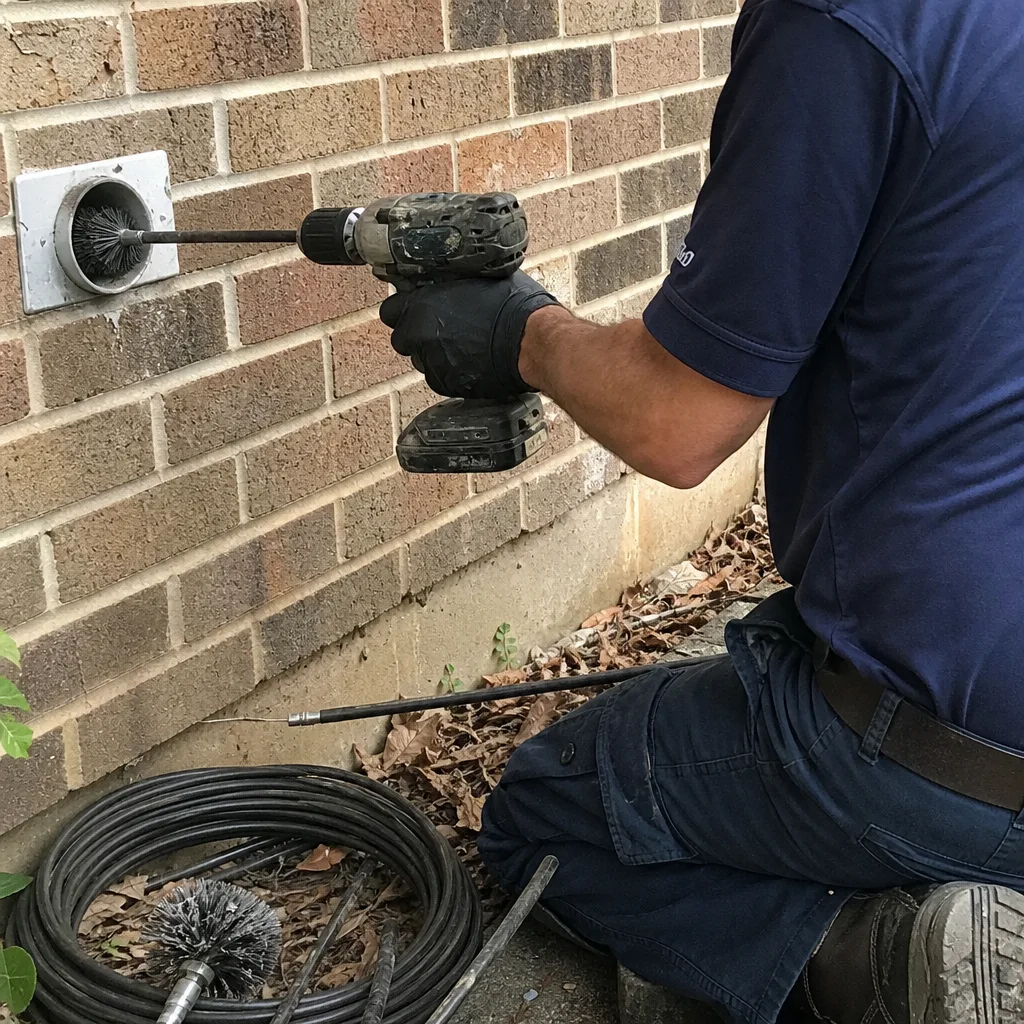
Most duct conditions evolve slowly and permit scheduled evaluation. Three specific observations require faster response, with measurable thresholds that remove guesswork.
Condition 1: Visible Debris at Supply Registers
Threshold: Particles visible in airflow during system operation, or debris accumulation on the boot floor that exceeds 1/4 inch depth.
What this means: The supply side of your system, which should deliver filtered air, is distributing material from the ductwork. This indicates either filter failure, duct breach allowing unfiltered air entry, or accumulation past the point where self-cleaning airflow can manage it. The health implication is direct: you’re breathing whatever is in that debris.
Condition 2: Persistent Musty or Chemical Odor
Threshold: Odor detectable within 30 seconds of system startup, persisting beyond the first 5 minutes of operation, present on 3+ consecutive days.
What this means: Intermittent odors from dust burn-off or outdoor air intrusion are normal. Persistent odors indicate biological growth, rodent presence, or material degradation in the ductwork. The 3-day persistence rule distinguishes transient from systemic problems. Photograph any visible staining and call for evaluation.
Condition 3: Uneven Airflow with System Running
Threshold: Tissue deflection at any supply register less than 50% of the strongest register, or no detectable airflow at one or more registers when blower is at full speed.
What this means: Duct runs are designed for balanced distribution. Significant imbalance indicates blockage, disconnection, or damper failure. In Cumming’s climate, a disconnected duct in an unconditioned attic wastes energy and dumps conditioned air where it serves no purpose. The threshold is measurable: if one bedroom’s tissue barely moves while the living room’s stands horizontal, you have a distribution problem requiring professional diagnosis.
None of these conditions are emergencies. All warrant evaluation within 5-7 days. CleanRun provides free estimates in Cumming; call (678) 693-5322 to schedule.
What Professional Equipment Actually Does (And What It Doesn’t)
Understanding professional duct cleaning equipment helps you evaluate service claims and avoid the shop-vacuum masquerade. The industry has legitimate tools and pretenders. The difference is photographable.
Negative-Pressure Extraction
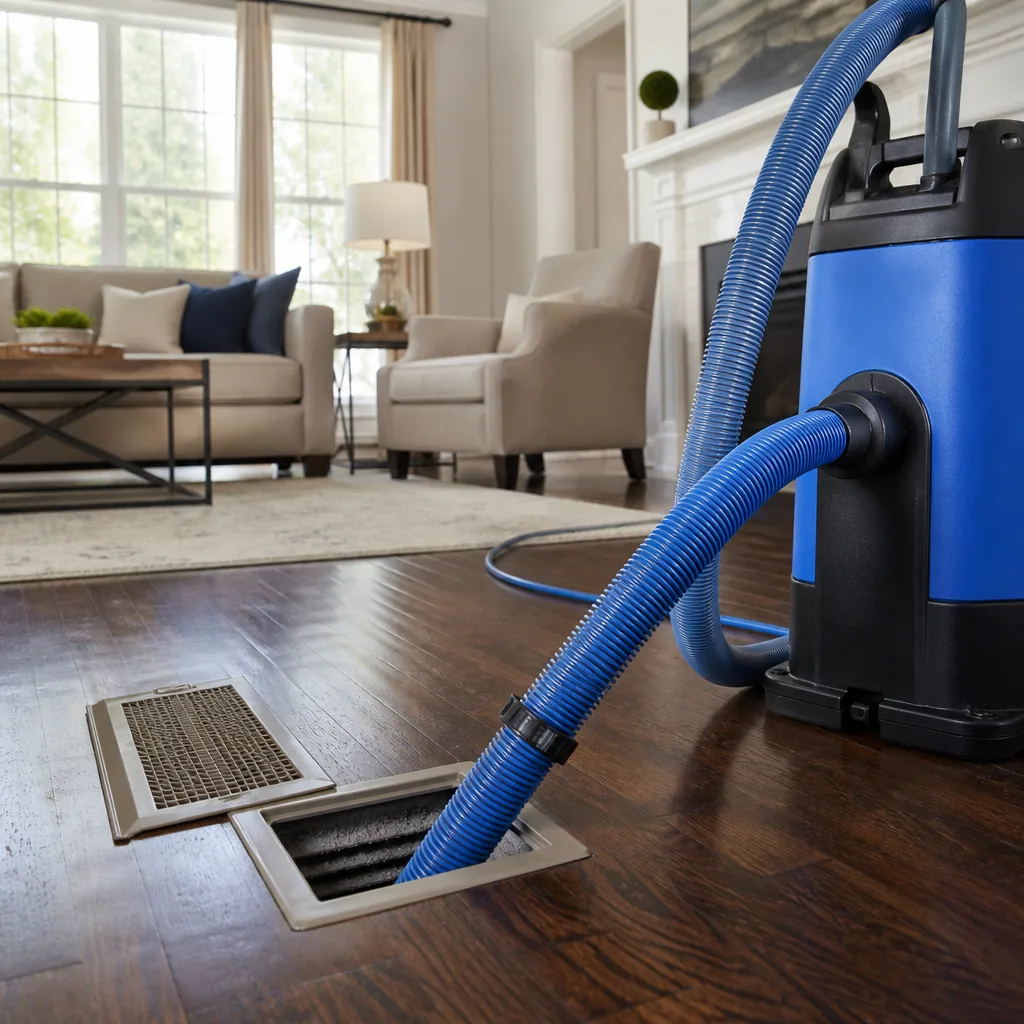
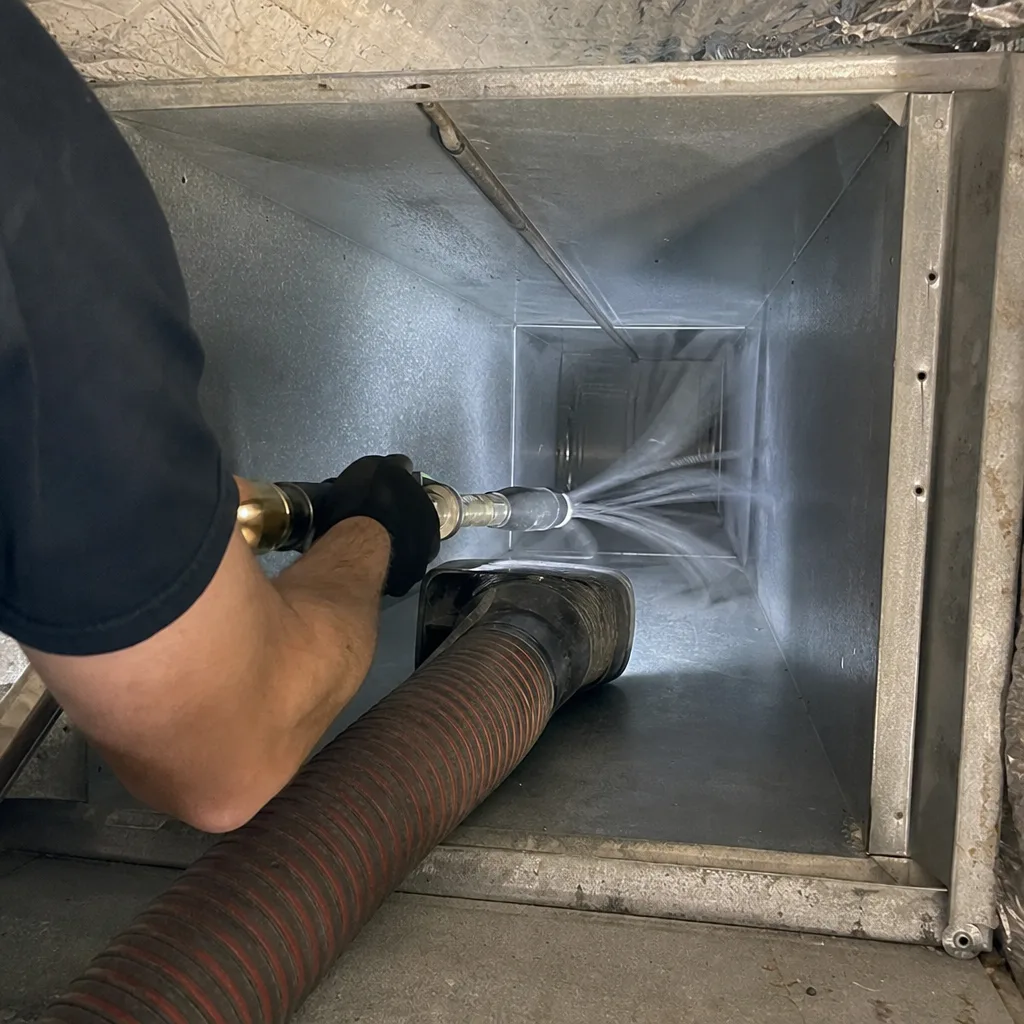
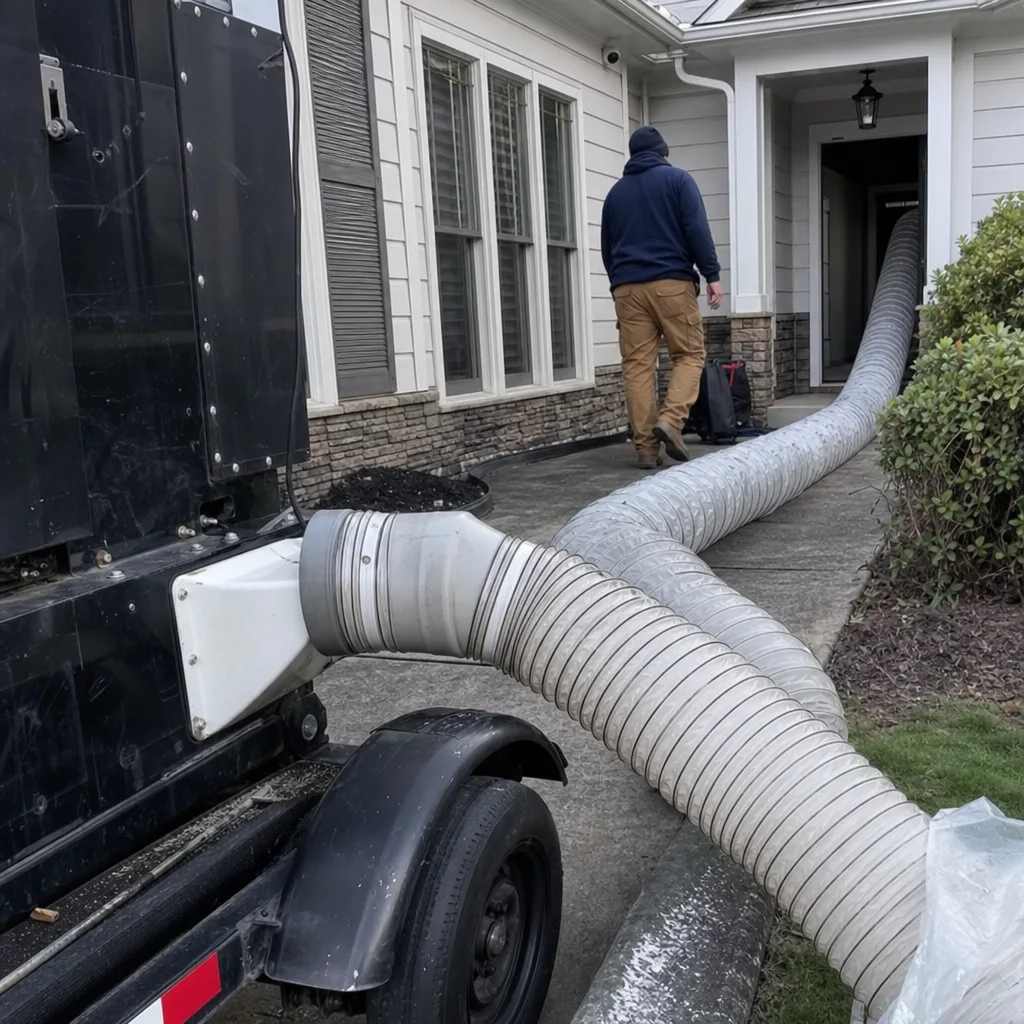
Professional duct cleaning connects a large vacuum, typically mounted in a service van, to your duct system. This creates negative pressure, suction that exceeds the blower’s normal operating capacity, throughout the ductwork. Agitation tools, rotary brushes or compressed-air whips, dislodge debris while the vacuum extracts it. The system is sealed during operation; debris does not escape into your home.
What a shop vacuum cannot do: generate sufficient airflow to move debris from distant branch runs, maintain sealed containment, or provide visual verification of extraction. A technician with a portable vacuum and a brush on a stick is performing contact cleaning of accessible surfaces only, not system-wide extraction.
Rotary Brush Systems
Rotobrush equipment, one of the brands CleanRun deploys, uses a rotating brush head on a flexible cable that traverses individual duct runs. The brush dislodges adhered debris; integrated vacuum extraction captures it. This is effective for residential ductwork with standard dimensions and construction. It is not effective for extremely heavy accumulation, which may require pre-agitation, or for duct types that damage easily.
Compressed Air Agitation
Nikro and Abatement Technologies manufacture systems that use compressed air to create turbulence inside ductwork, suspending debris for vacuum extraction. These systems work well for light to moderate accumulation and are less likely to damage flexible ductwork. They are less effective on debris that has adhered to duct walls over years without disturbance.
What No Equipment Can Do
No cleaning system restores ductwork to factory-new condition. Seams remain, minor corrosion remains, and some debris adheres permanently. The goal is removal of loose and lightly adhered material that affects airflow and air quality, not perfection. Any service claiming to “sanitize” or “sterilize” ductwork should be asked for EPA registration numbers of any chemical used, and for documentation of application method and dwell time.
CleanRun’s equipment roster includes Rotobrush, Nikro, and Abatement Technologies systems, selected based on duct type and accumulation level observed during pre-service inspection. The written scope, delivered before work starts under Haven Standard Clause 1, specifies which equipment will be used and what results are reasonably achievable.
Common Mistakes to Avoid
- Ignoring the filter rack back side. We’ve found this surface loaded with debris in 40% of Cumming homes where the homeowner believed filters were “working fine.” The seal surface matters as much as the filter media.
- Buying the cheapest filter that fits. Fiberglass panel filters, typically MERV 4 or below, protect equipment from large debris but do not meaningfully filter what you breathe. They are false economy for households with any respiratory sensitivity.
- Sealing registers with tape or plastic “to keep dust out” during renovation. This creates pressure imbalances that strain the blower and can collapse flexible ductwork. Use the system’s fan-only mode with a high-MERV filter during construction, or temporarily block returns with filter media, not impermeable barriers.
- Assuming new construction means clean ducts. Construction debris, including drywall dust, wood particles, and fastener fragments, commonly enters ductwork during building. Homes built 2015-2025 in Cumming’s growth areas often benefit from initial cleaning within the first 2 years.
- Trusting “sanitizing” claims without verification. EPA-registered antimicrobial application requires specific dwell times, ventilation protocols, and post-application verification. A technician who sprays and leaves has not performed validated sanitization.
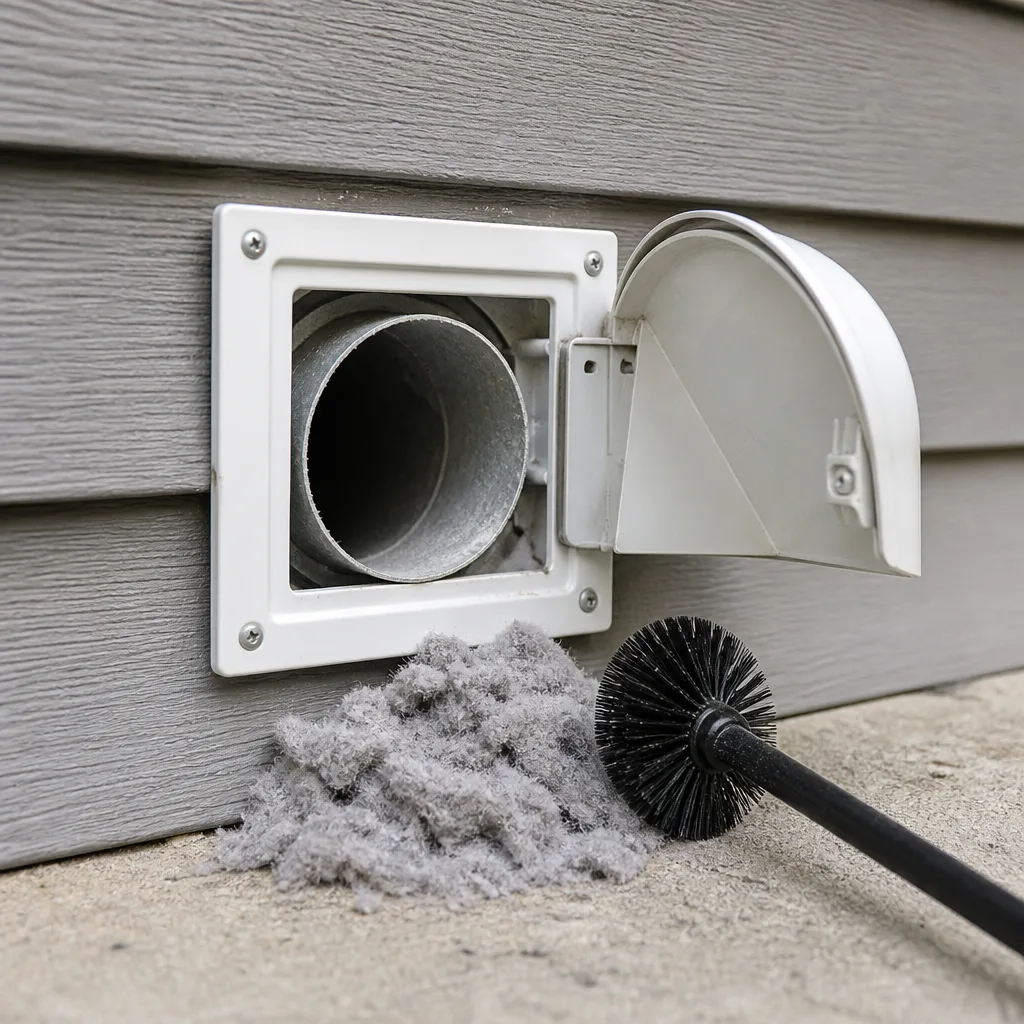
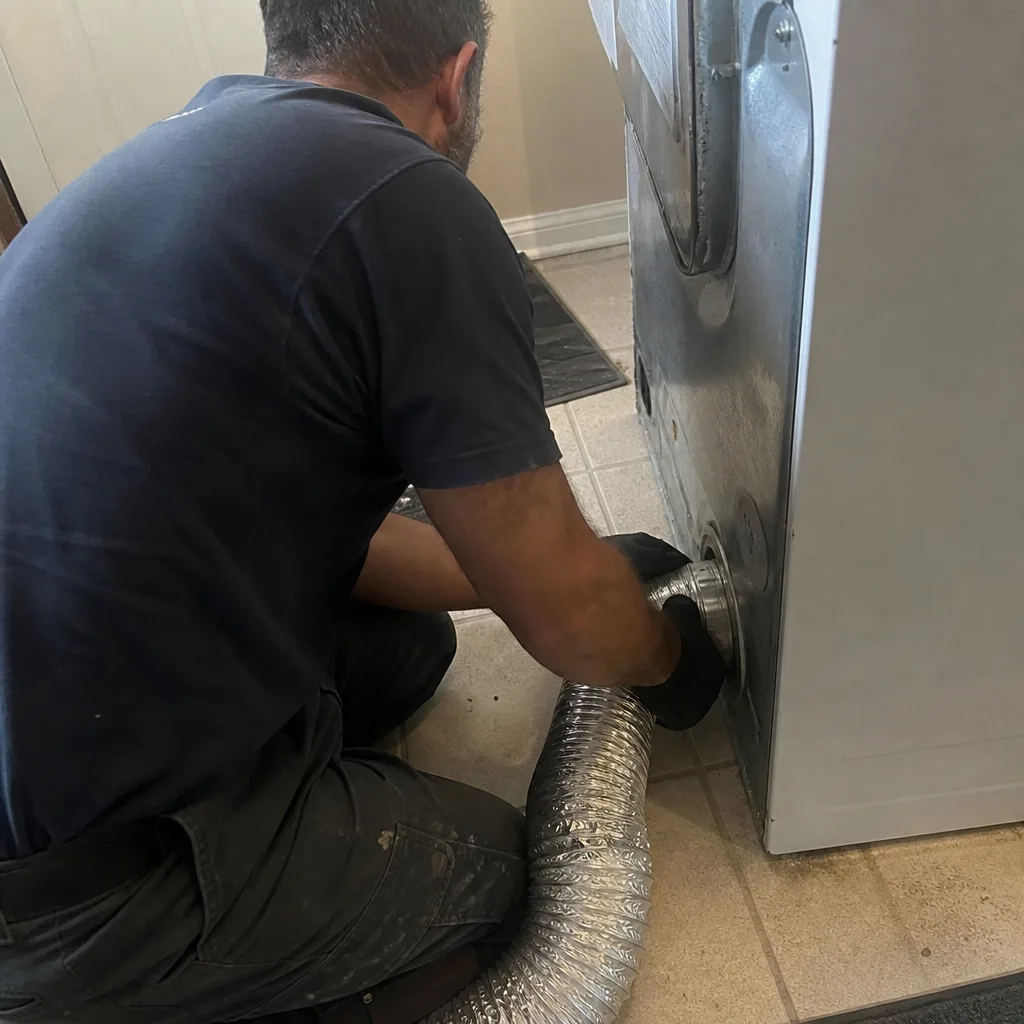
- Neglecting the dryer vent. Lint accumulation in the dryer duct, which shares no connection to HVAC ductwork, creates fire risk and moisture problems. Dryer Vent Cleaning in Cumming is a separate service with its own inspection protocol.
When to Call a Professional
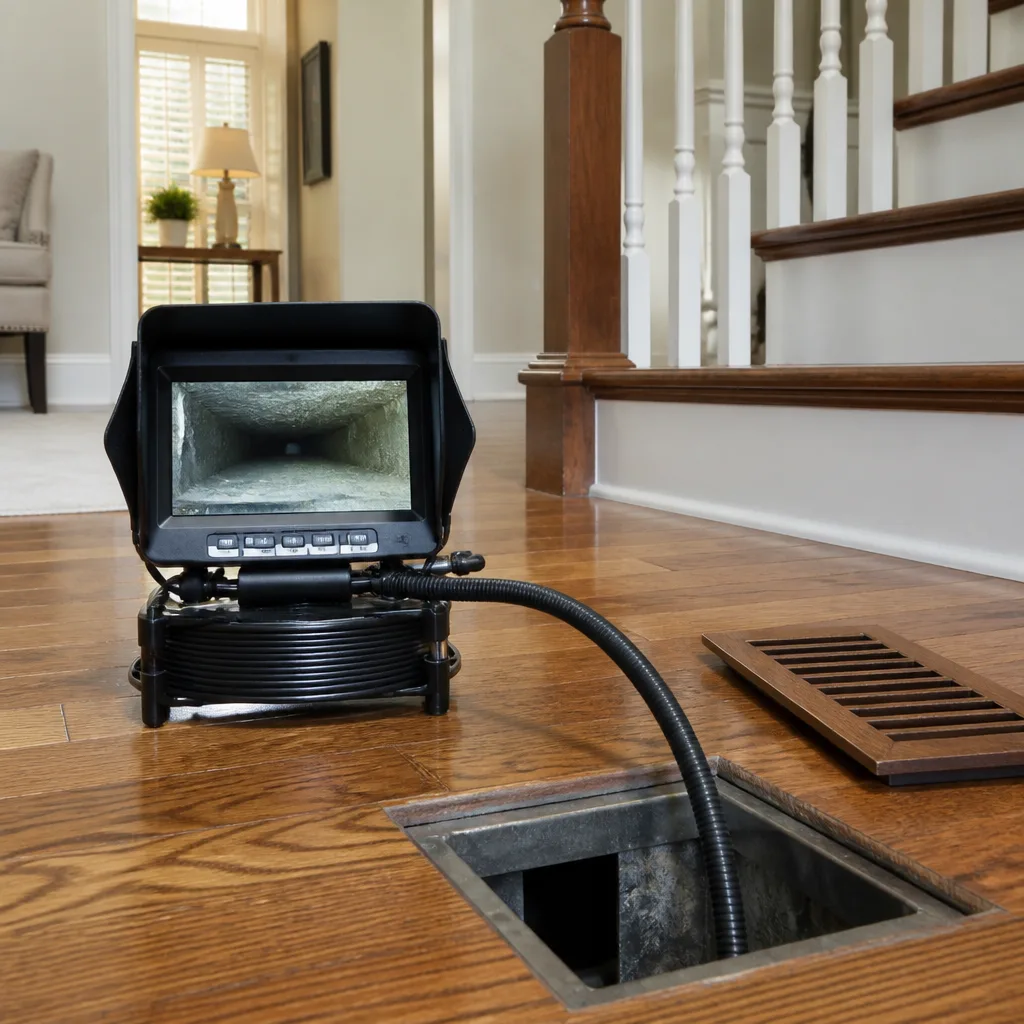
Call when your documentation shows measurable change from baseline, when any of the three threshold conditions above is met, or when you’re purchasing a home and cannot verify prior maintenance. Professional evaluation should include camera inspection of duct interiors, written scope of recommended work, and written price before any service begins.
CleanRun Air Duct Cleaning Cumming offers free estimates in Cumming. Every estimate includes inspection, documentation, and a written scope with price under Haven Standard Clause 1. Explore our more guides & resources to prepare for your appointment. No call-for-quote games. Call (678) 693-5322 to schedule.
Frequently Asked Questions
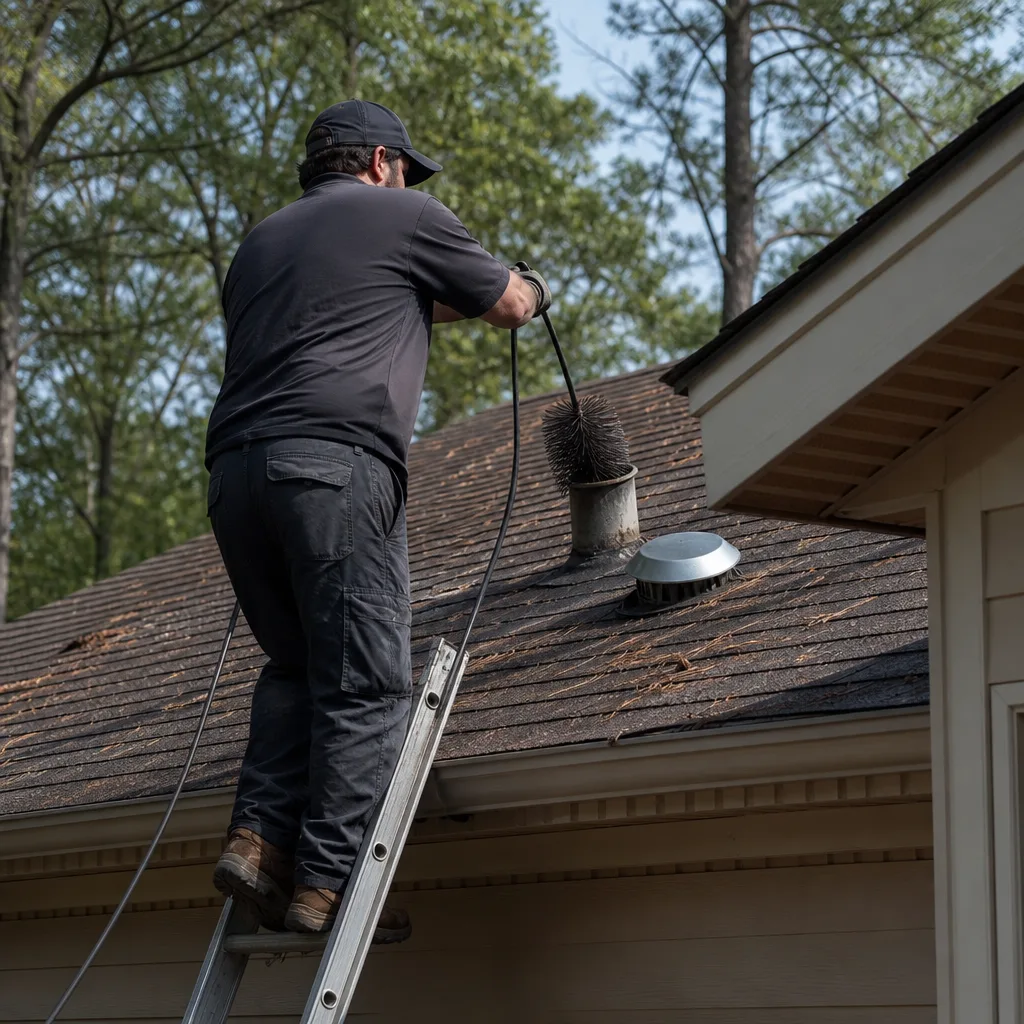
Whole-system duct cleaning for a typical Cumming home ranges from $400 to $800 depending on system size, accessibility, and accumulation level. CleanRun delivers a written price before any work starts, with no per-vent add-ons or post-arrival upsells. Call (678) 693-5322 for a free estimate specific to your home.
The $79-$129 coupon model typically covers a brief vacuuming of accessible register areas, not full-system cleaning. The low entry price funds aggressive upselling once the technician is in your home. A legitimate whole-system service, with negative-pressure extraction, agitation of every duct run, and documented photo record, cannot be performed at coupon prices. Ask any low-quote provider to specify, in writing, exactly which duct runs will be cleaned and which equipment will be used.
Demand before-and-after photography of every duct run, with timestamps or sequential numbering. CleanRun includes this as a standard deliverable on every job, a practice held since 2013. Without photographic evidence, you’re trusting a technician’s verbal report about work you cannot observe directly.
In Cumming, with our pollen load and active construction, most homes benefit from professional cleaning every 3 to 4 years with disciplined filter maintenance. Homes with multiple pets, allergy-sensitive occupants, or nearby construction may need service every 2 years. The 20-minute inspection protocol above tells you when your specific home is ready, not a calendar.
Homeowners can maintain registers, change filters, and inspect visible surfaces. The internal ductwork, particularly return plenums and branch runs in wall cavities, requires professional equipment for safe and effective cleaning. Attempting to access these areas without proper tools risks duct damage and personal injury. We recommend the inspection protocol in this guide for homeowner execution, and professional service for internal cleaning.
Moderate debris accumulation has minimal effect on efficiency. Significant blockage, particularly at coils or in restrictive duct runs, can increase energy consumption. The primary benefits of cleaning are air quality and system longevity, not dramatic utility bill reduction. Any service promising 30% energy savings from duct cleaning is misrepresenting the physics.
Duct cleaning addresses the distribution network: supply and return ducts, registers, and grilles. HVAC cleaning includes the blower compartment, evaporator coil, and heat exchanger, the components that condition air before distribution. In Cumming’s humid climate, coil cleaning is often the more impactful service for system performance. CleanRun offers both, with scope defined in writing before work begins.
The Bottom Line
Effective duct maintenance in Cumming is visual, seasonal, and documented. The 20-minute inspection protocol, performed in late April and late September, gives you actionable data about your specific home. Filter intervals adjusted for local pollen load and household conditions prevent the accumulation that drives unnecessary service calls. Three measurable thresholds, debris at registers, persistent odor, and airflow imbalance, tell you when professional evaluation is warranted. Everything else is calendar guessing.
Your documentation discipline, photos with dates and labels, protects you from both neglect and overselling. It lets you verify any claim, compare conditions over time, and make informed decisions about when to call for service. The equipment and standards described here exist to make that verification possible, not to replace your own observation.
CleanRun Air Duct Cleaning Cumming has served Forsyth County homeowners since 2013 with written prices before work starts, documented photo records on every visit, and the 365-Day Done Right Promise backed in writing. Call (678) 693-5322 for a free estimate, or to discuss what your own inspection has revealed.
Written by Tomas Reyes, Owner at CleanRun Air Duct Cleaning Cumming, serving Cumming since 2013.