
Last updated September 23, 2026
Whole-system duct and dryer vent check with before-and-after photos - you see exactly what came out of your vents
That "$99 whole-house special" is a bait ad - the real number appears once they are in your hallway, or the "clean" is a shop-vac at the register. We photograph the inside of your ducts before and after instead.
 Before
 After
After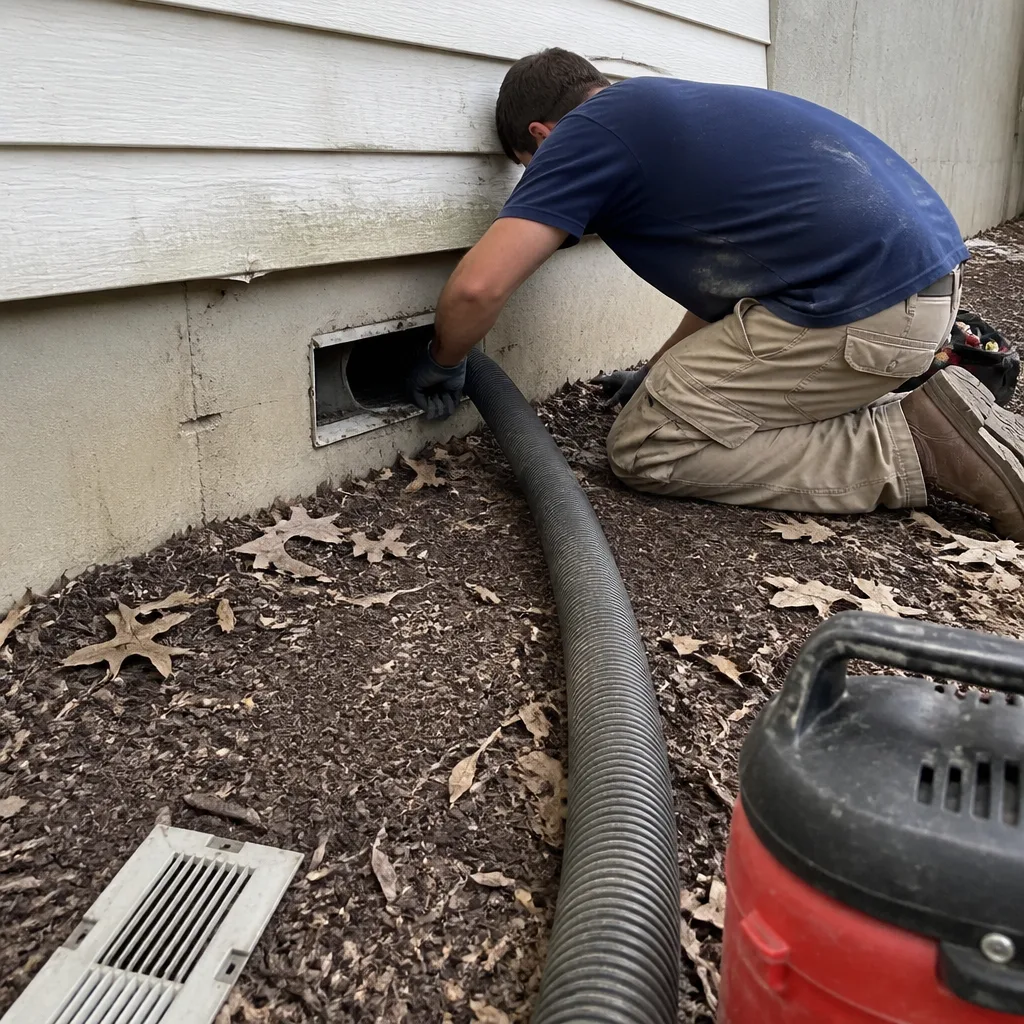 Before
 After
After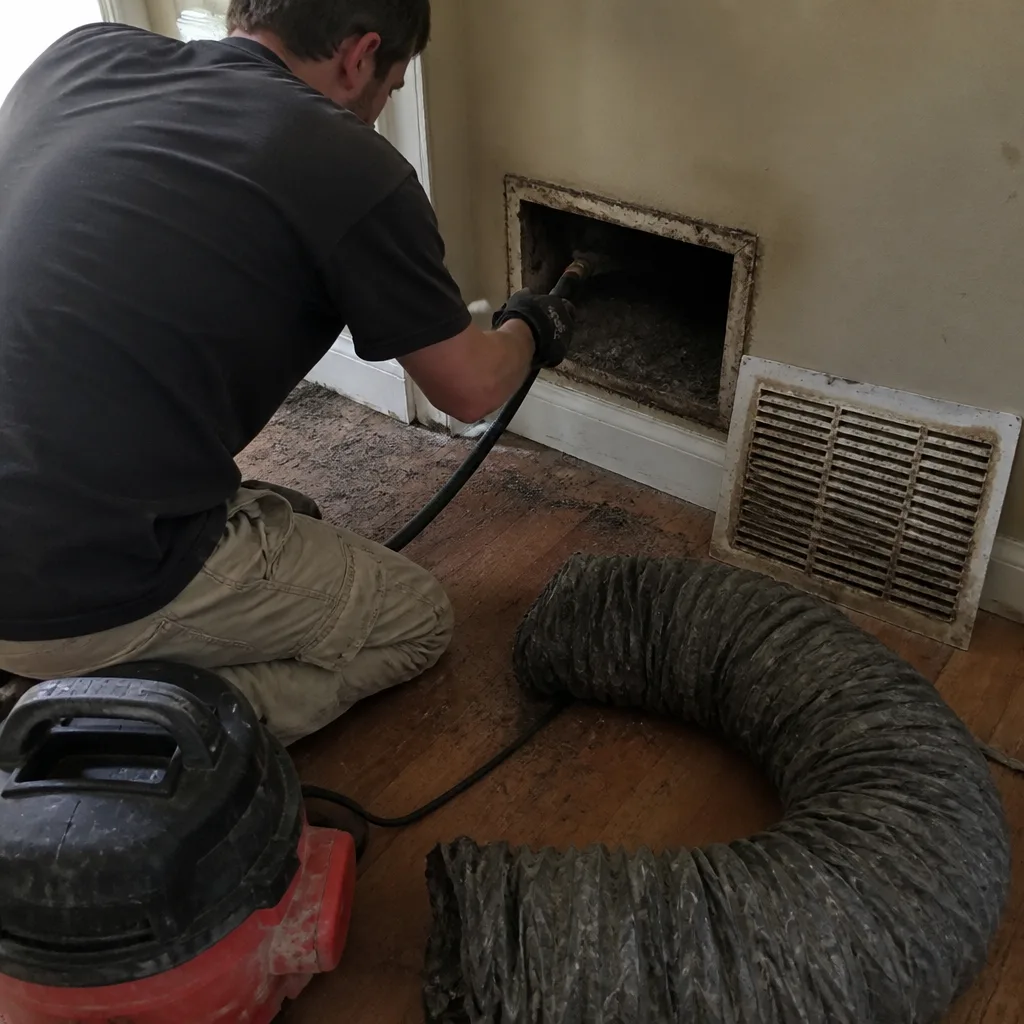 Before
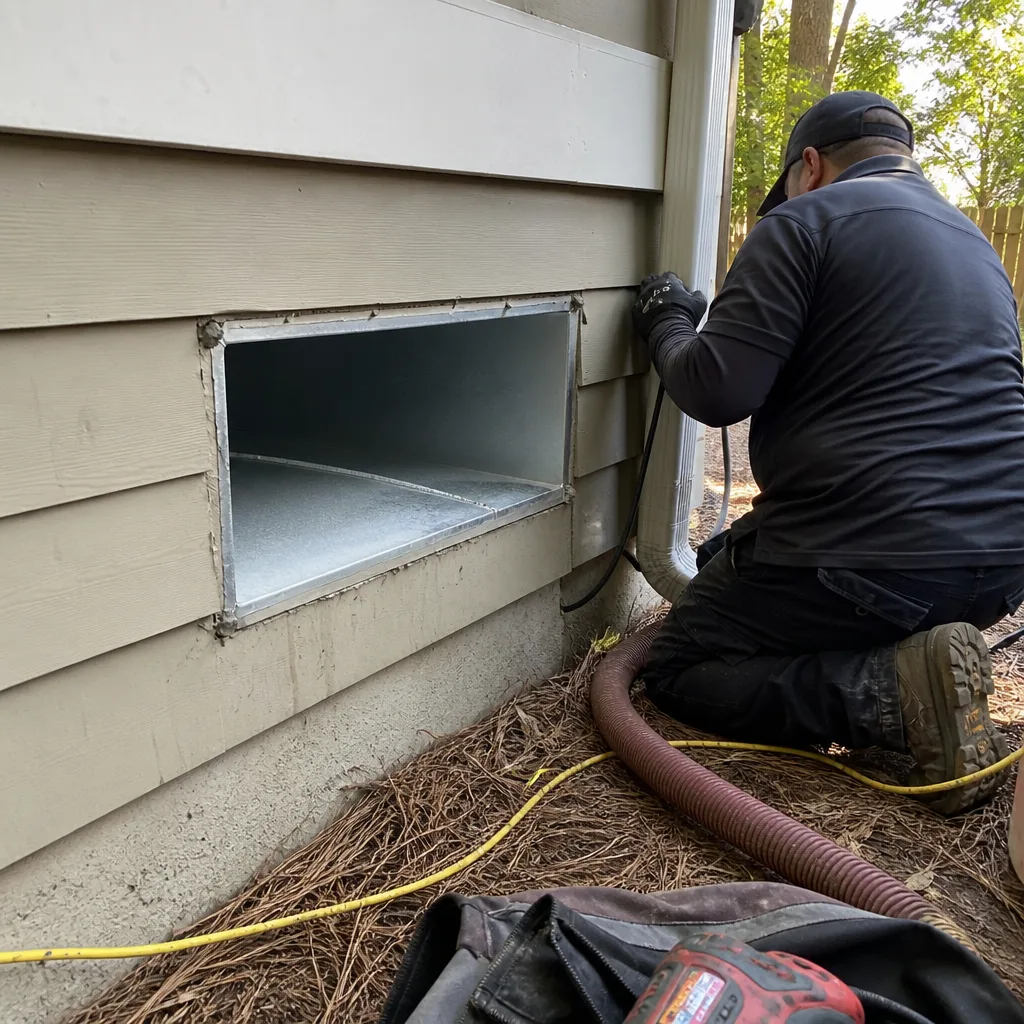 After
AfterThe Complete Guide to Air Duct Cleaning in Cumming
A 2,400-square-foot home in Cumming typically contains 18 to 24 individual duct runs. The $79 coupon company usually cleans fewer than half of them before calling the job done. In this guide, we’ll walk through what a complete duct system inventory looks like for Forsyth County homes, what our cameras actually find inside North Georgia ductwork, and how to tell Air Duct Cleaning services that produce documented work from vacuum noise. You’ll learn to read a before-and-after photo package like a technician, understand why your 2005 build may have failing tape inside its walls, and know exactly what price range honest whole-system cleaning falls into in the Cumming market.
Quick Answer
Professional air duct cleaning in Cumming costs $450 to $850 for a complete whole-system cleaning on a typical 2,000 to 3,000 square foot home, and the job should include a written price before work starts, a full inventory of every duct run, and photographic documentation of each one before and after. Methods range from negative-pressure extraction (truck-mounted vacuum) to contact cleaning with rotary brushes (Rotobrush, Nikro), with the right approach depending on your duct material, age, and contamination type. Avoid any quote based on “per vent” pricing or any company that cannot show you dated, location-stamped photos from recent Cumming jobs. For help evaluating providers, see our How to Hire a Air Duct Cleaning Contractor in Cumming: A Step-by-Step Guide.
Table of Contents
- What a Complete Duct System Inventory Looks Like in Forsyth County
- What Duct-Camera Footage Actually Shows in Georgia Homes
- Negative-Pressure vs. Contact Cleaning: Which Method When
- How to Read a Before-and-After Photo Package as Proof of Work
- Why Cumming’s Rapid Growth Created a Hidden Duct Problem (2000-2015)
- What Air Duct Cleaning Costs in Cumming (and What the Price Includes)
- Common Mistakes to Avoid
- When to Call a Professional
- Frequently Asked Questions
BeforeAfterWhat a Complete Duct System Inventory Looks Like in Forsyth County
Most Cumming homeowners have never seen a complete list of their ductwork. That’s by design. The industry profits from ambiguity about what “whole house” actually means.
A typical Forsyth County home built between 1995 and 2015 contains 18 to 24 duct runs: 10 to 14 supply runs delivering conditioned air to rooms, and 6 to 10 return runs pulling air back to the air handler. The supply side operates under positive pressure (air pushed out), while the return side operates under negative pressure (air drawn in). Each side requires different cleaning equipment and technique. A company that treats both identically is cutting corners.
Here’s what a proper inventory looks like on paper:
- Count and locate every supply register - the floor or ceiling vents in each room. Each register connects to one duct run, which may be flexible duct, fiberglass board, or sheet metal.
- Count and locate every return grille - usually larger, often in hallways or central areas. Return runs are typically fewer in number but larger in diameter, and they collect the most debris because they pull unfiltered air from your living space.
- Map the plenum connections - the plenum is the large distribution box attached directly to your air handler. Every run connects here. A technician should photograph the plenum interior; it’s often the dirtiest point in the system.
- Identify the air handler location - basement, crawl space, attic, or closet. This determines access difficulty and equipment selection.
- Document duct material and condition - flexible duct crushes easily under aggressive vacuum pressure. Fiberglass board sheds liner when disturbed. Sheet metal tolerates more aggressive methods but may harbor rust or previous water damage.
In Cumming’s older subdivisions like Windermere and Vickery Village, we’ve found homes with 26 or more runs where additions were built without proper duct sizing. The original 3-ton system now struggles to push air through ductwork designed for 2 tons. Cleaning helps, but the inventory report also flags this mismatch so the homeowner understands why certain rooms never feel right.
The Air Duct Cleaning in Cumming page details our standard inventory process. Every CleanRun job starts with this written scope: a count of runs, a notation of material type, and a condition assessment of accessible components. Haven Standard Clause 1 requires the written price to match this scope exactly. No surprises after the truck arrives.
What Duct-Camera Footage Actually Shows in Georgia Homes
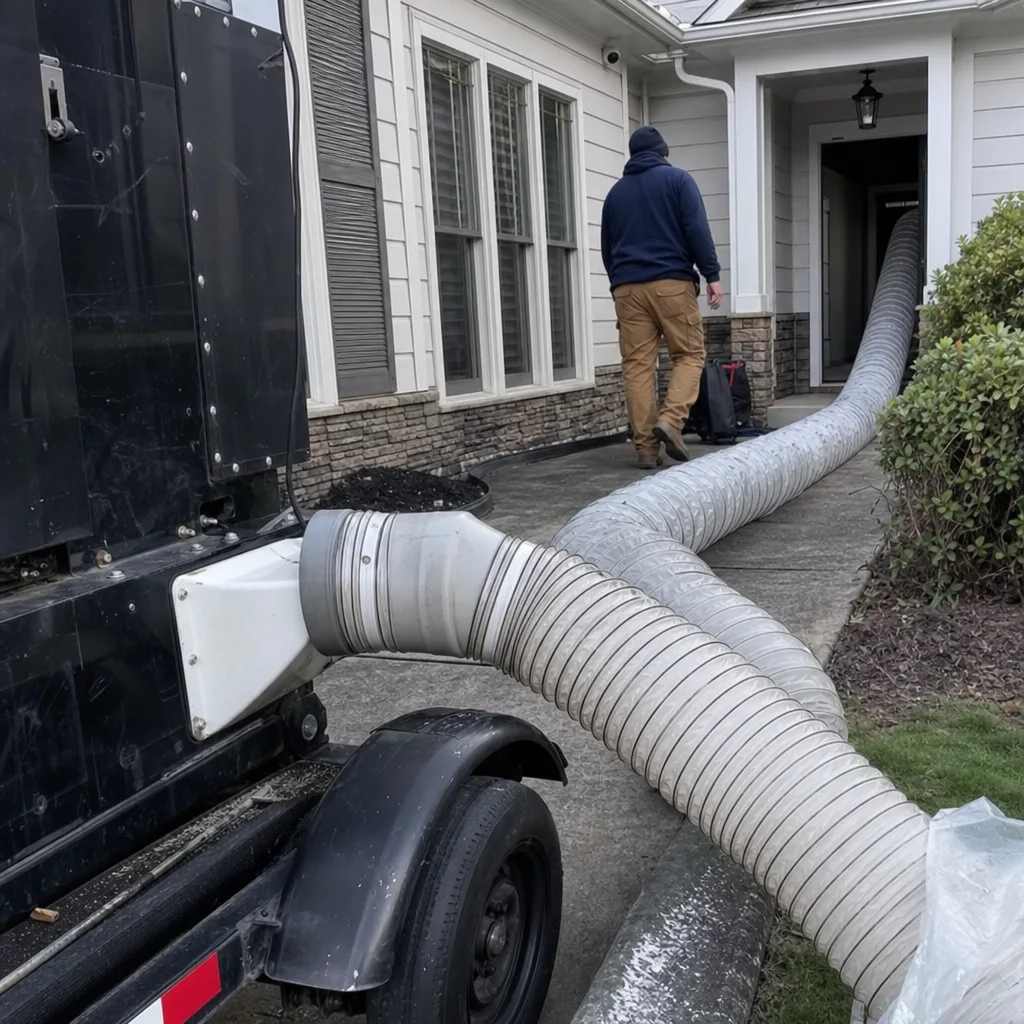
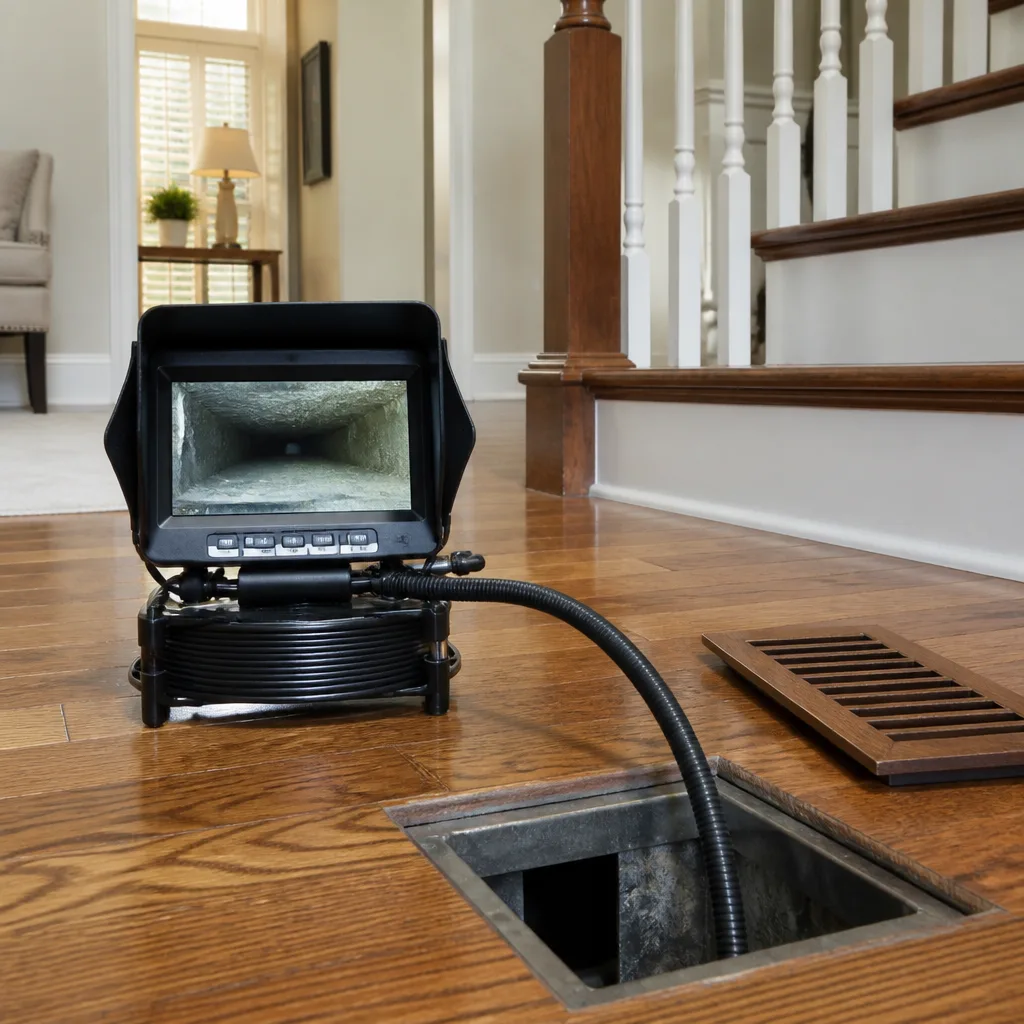
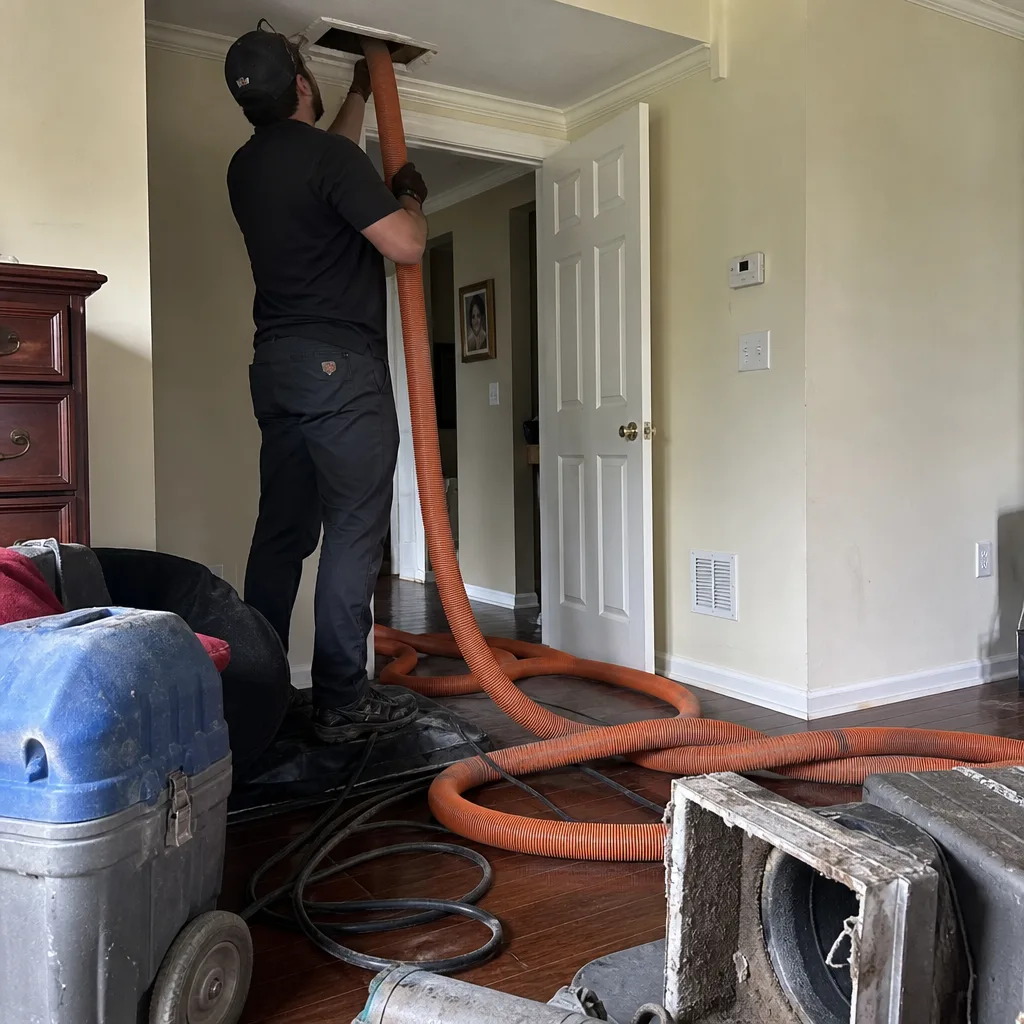
We photograph the inside of every duct run on every job. After 52,000 homes, the patterns are distinct to this region. Here’s what our cameras find in Cumming homes specifically.
Red Clay Dust Compaction
North Georgia’s red clay soil produces fine, iron-rich dust that infiltrates homes through crawl spaces, attic vents, and the small gaps around return grilles. Over years, this dust compacts into a dense, brick-colored layer on duct floors. In Cumming homes near construction zones - and there are many, with the city’s rapid expansion - we’ve measured compaction up to 3 inches thick at low points and elbows where airflow slows. This material doesn’t vacuum out easily. It requires contact agitation with a rotary brush system like Rotobrush or Nikro equipment to break the bond before extraction.
Fiberglass Liner Separation
Homes built between 1990 and 2010 often used fiberglass-lined duct board for its insulation value and low cost. The liner degrades over time, especially in Georgia’s humidity. Our cameras show the fuzzy surface becoming smooth as the glass fibers detach and circulate through your home. In some Cumming homes, we’ve found liner separation so advanced that the underlying board is exposed. This isn’t a cleaning issue; it’s a replacement issue, and we document it with photos rather than clean over it and pretend the problem is solved.
Seasonal Insect Debris
The Southeast’s extended warm season means insects remain active in crawl spaces and attics well into November. Stink bugs, lady beetles, and paper wasps enter duct systems through gaps and die inside. Their remains, plus the organic matter they carried in, create localized contamination points. Our cameras find these as dark, irregular patches, often near exterior wall penetrations. In Cumming’s wooded lots - common in neighborhoods like Chattahoochee River Club and The Enclave - this pattern appears more frequently than in denser, cleared developments.
Construction Debris in Newer Homes
Cumming’s building boom means many homes under 10 years old still contain original construction debris: drywall dust, wood shavings, insulation scraps, and even discarded fast-food wrappers left by crews. One 2019 home in the Brannon Oak Farm area contained a complete drywall mud pan in the return plenum. The homeowners had lived there three years with persistent dust issues no filter could solve.
These findings are not abstract. They’re dated, location-stamped, and delivered to the customer as part of CleanRun’s standard Documented Photo Record. You see what we saw. You decide what requires action.
Negative-Pressure vs. Contact Cleaning: Which Method When
Two legitimate methods exist - learn more in our DIY vs Professional Air Duct Cleaning: The Cumming Homeowner’s Decision Guide. Most companies use one exclusively because owning both systems is expensive. The right method depends on your ductwork, not the company’s equipment inventory.
Negative-Pressure Extraction (Truck-Mounted Vacuum)
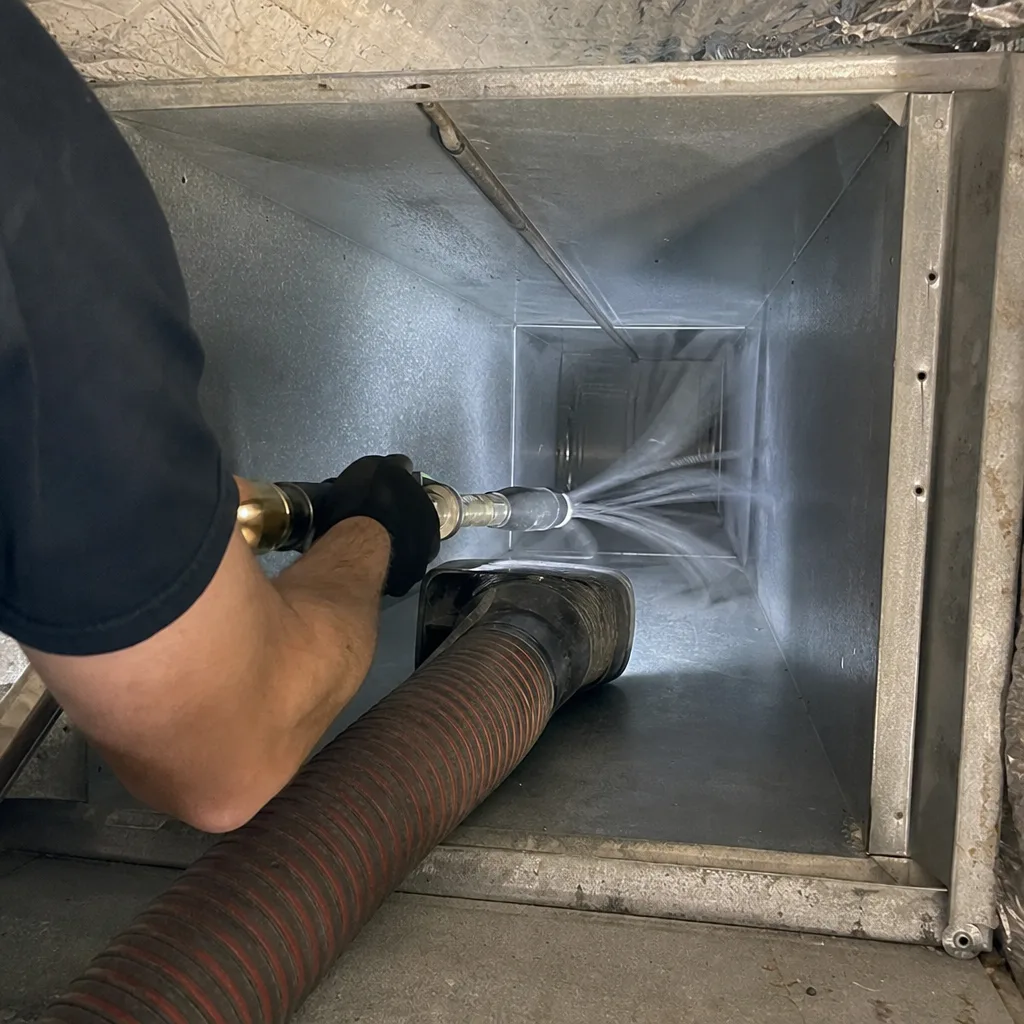
A large vacuum unit, typically mounted on a truck or trailer, connects to your duct system near the air handler. The system is sealed, and the vacuum pulls 5,000 to 10,000 cubic feet per minute of air through the entire network. Access ports are opened at strategic points, and compressed air tools or whips are inserted to dislodge debris that the vacuum then captures.
Best for: Sheet metal duct systems in good condition; homes with significant debris throughout; commercial applications; systems where mechanical agitation might damage fragile components.
Limitations: Less effective on adhered contamination like compacted clay dust; can collapse aging flexible duct if pressure isn’t monitored; requires careful sealing to prevent pulling debris into living spaces through register gaps.
Contact Cleaning (Rotary Brush + Vacuum)
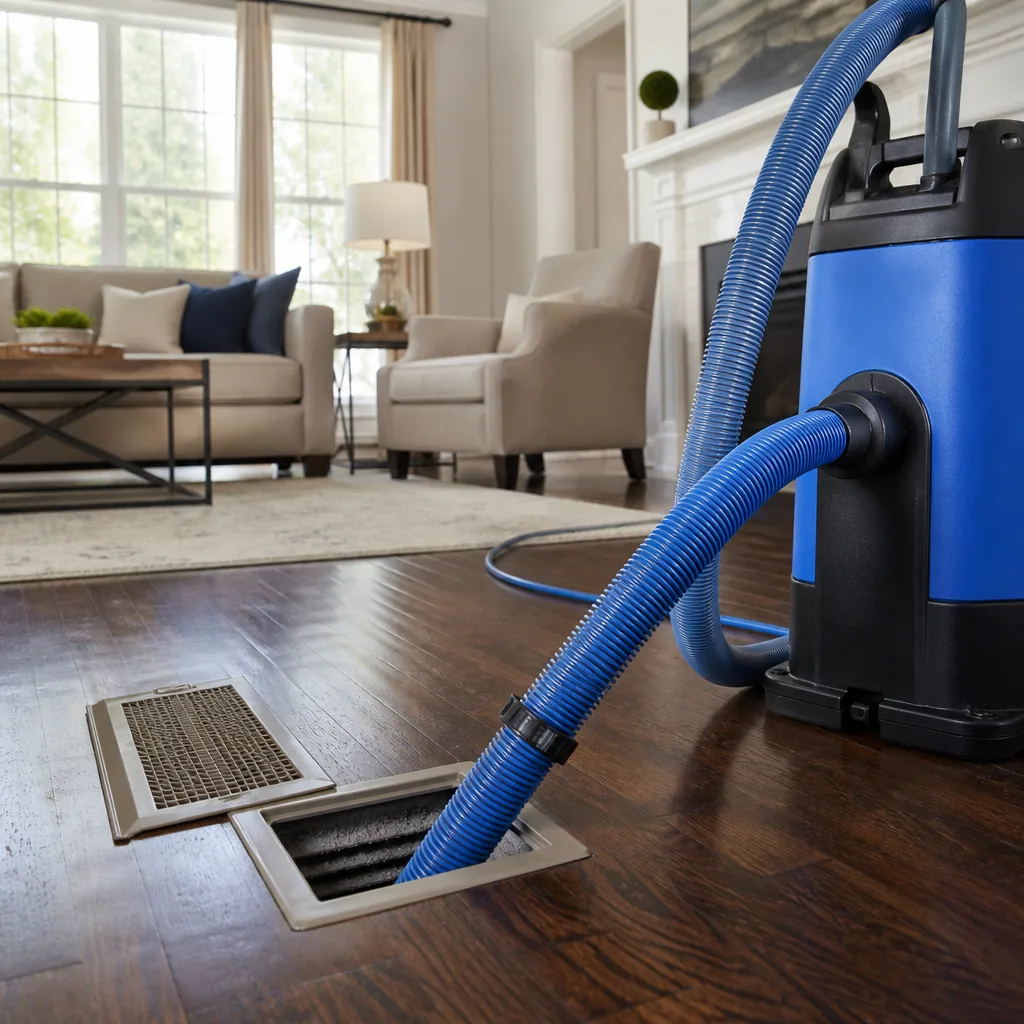
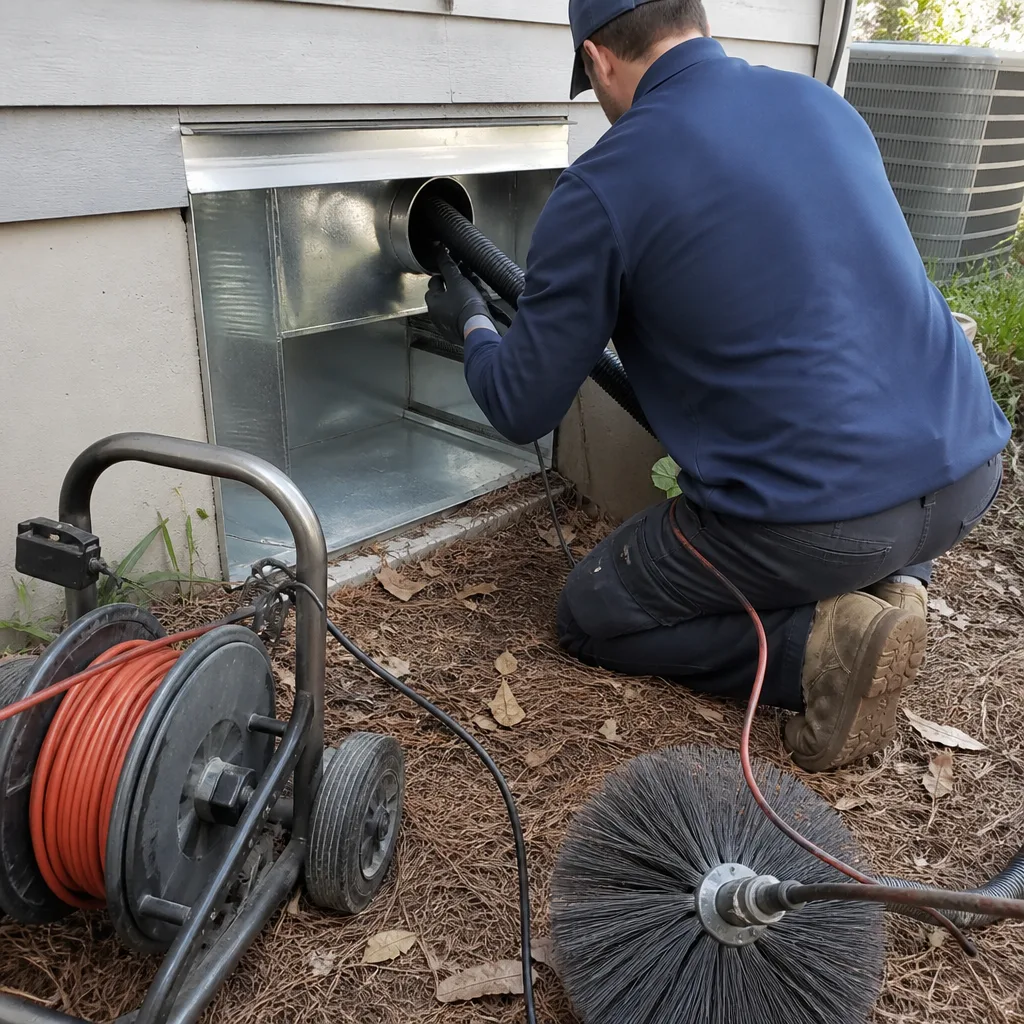
A powered rotary brush - think of a long, flexible drain snake with bristles - is inserted into each individual duct run. The brush physically scrubs the interior surface while a portable vacuum captures dislodged debris at the point of generation. Equipment from Rotobrush and Nikro dominates this category, with brush diameters sized to match duct dimensions.
Best for: Flexible duct and fiberglass board where aggressive vacuum pressure risks damage; systems with compacted or adhered contamination; targeted cleaning of individual problem runs; homes where truck access is limited.
Limitations: Slower per run than negative-pressure; brush selection must match duct diameter to avoid damage; requires more technician attention to ensure complete coverage.
The CleanRun Approach
We maintain both systems because Forsyth County homes require both. A 2002 home in Cumming’s Windermere neighborhood with original flexible duct and red clay compaction gets contact cleaning with Rotobrush equipment on the supply runs, negative-pressure extraction on the sheet metal return trunk, and specific attention to the plenum where the two materials meet. The written scope specifies which method applies to which runs, and the photo record confirms execution.
Equipment matters. Abatement Technologies and Guardsman systems represent the professional grade that homeowners can research independently. When a technician names the equipment being used, you can verify its specifications and intended application. That’s evidence-first service.
How to Read a Before-and-After Photo Package as Proof of Work
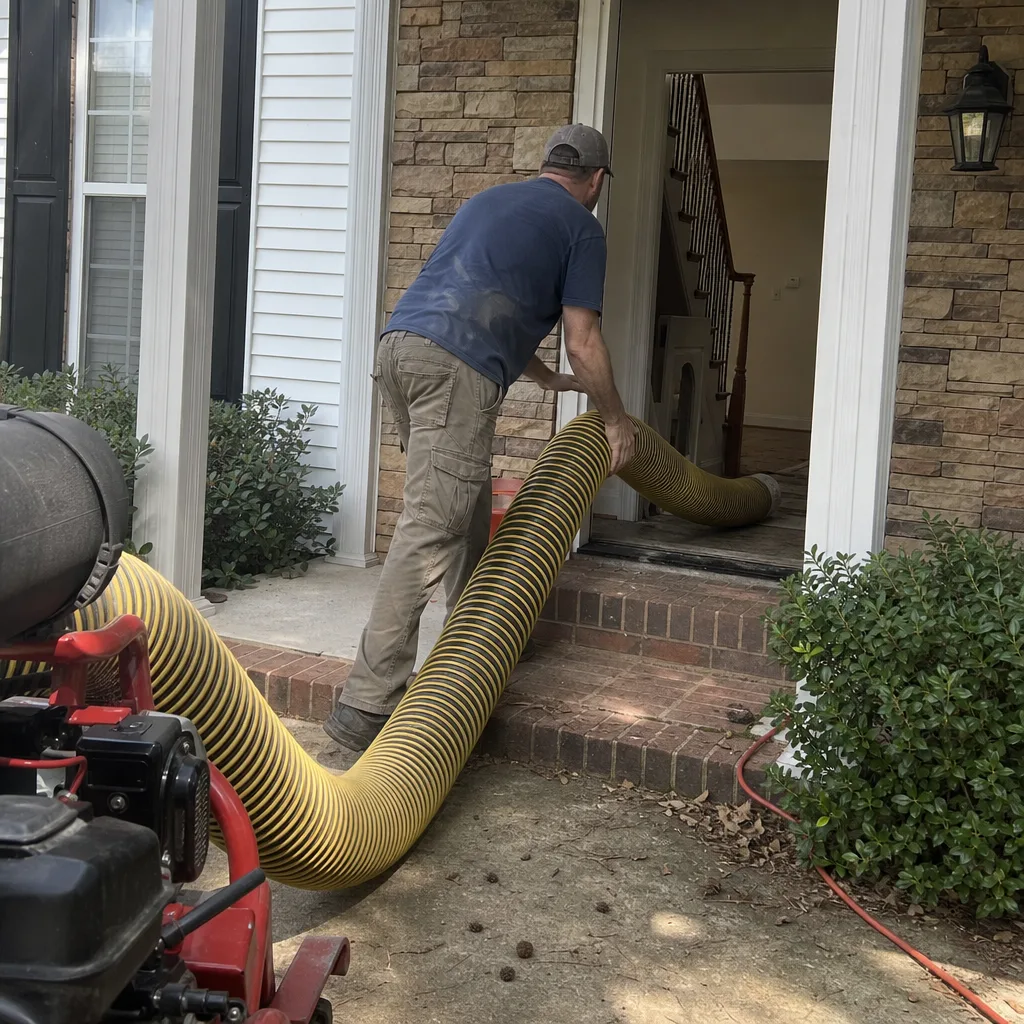
The photo record is where documented work separates from undocumented claims. Here’s what to look for.
What “Clean” Looks Like on Camera
A properly cleaned sheet metal duct interior shows uniform metallic gray or silver, with no visible debris accumulation, no staining patterns, and no standing material at joints or low points. Flexible duct shows the ribbed interior surface clearly, with no coating between ribs. Fiberglass board shows intact liner with uniform texture; bare spots indicate either pre-existing damage or aggressive cleaning that removed material rather than contamination.
Red Flags in “After” Photos
- Only one or two photos total. A complete job on 20 runs should produce 40 photos minimum (before and after for each run), plus plenum and air handler images.
- No location identifiers. Photos should show register locations, room context, or at minimum a dated, job-numbered overlay that connects the image to your specific service.
- Identical “before” and “after” lighting or angle. Matching perspectives prove the same location was photographed twice. Different angles suggest the “after” photo came from a different, cleaner run.
- Clean photos that show only register surrounds, not duct interiors. The register is 2 inches of visible metal; the duct behind it is 20 feet of hidden space. Both matter.
- No timestamp or technician identification. CleanRun photos include job number, date, technician name, and run identifier. This isn’t paranoia; it’s accountability under Haven Standard Clause 2: Documented Outcomes.
What We Deliver
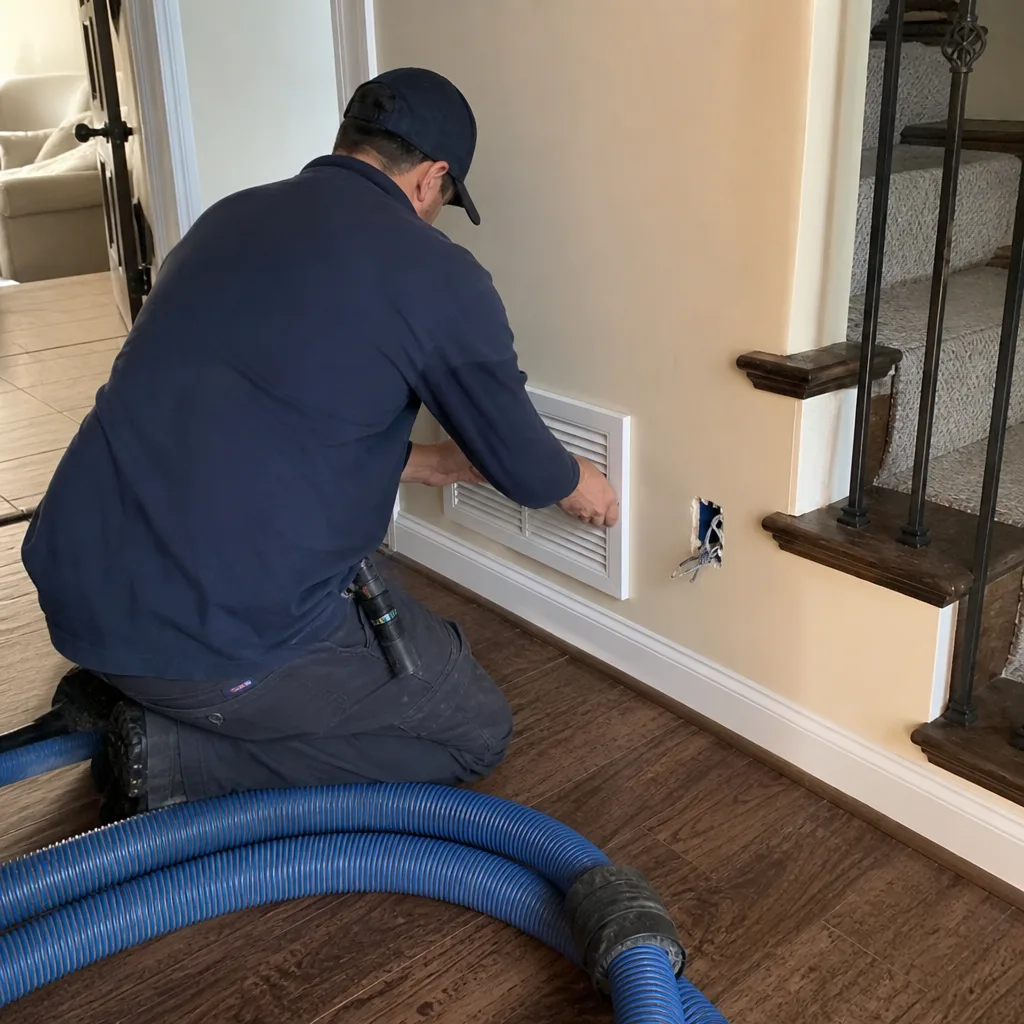
Every CleanRun customer receives a digital photo record organized by run: “Master Bedroom Supply 1,” “Hallway Return,” “Plenum - Air Handler Side.” Each entry contains a before image and an after image, both with location context. The technician reviews these with the homeowner before leaving, pointing out specific findings and explaining any recommendations for repair or additional service.
This practice began with our first job in 2013. It continues because it works: customers who see evidence don’t need to trust promises.
Why Cumming’s Rapid Growth Created a Hidden Duct Problem (2000-2015)
Cumming’s population grew from approximately 5,000 in 2000 to over 7,000 by 2015 - and the incorporated area expanded far beyond city limits through annexation and new development. That growth produced thousands of homes built quickly, to code minimums, with materials that age poorly in Georgia’s climate.
The Factory Duct Tape Failure
Building codes through the 2000s permitted duct sealing with UL-181 tape, a pressure-sensitive adhesive product. In Georgia’s humidity and temperature cycles, this tape degrades. The adhesive dries. The tape loosens. Air leaks into attics and crawl spaces, carrying conditioned air you paid to create and pulling unconditioned, unfiltered air into your return system.
The problem is invisible. The tape is inside walls, above ceilings, below floors. Homeowners notice the symptoms: rooms that won’t maintain temperature, dust that returns within days of cleaning, energy bills that climb without explanation. The tape has failed silently for years.
Where We Find It in Cumming
Neighborhoods built during peak growth - 2000 to 2010 - show this pattern most consistently. Homes in CleanRun Air Duct Cleaning Cumming home service area like those near Kelly Mill Road, Bethelview Road, and the original Vickery Village construction phase frequently contain original tape that has lost adhesion at plenum connections and duct joints. Our cameras find gaps of 1/4 inch or more, sometimes with tape hanging loose like a flag.
The Repair, Not Just the Clean
Cleaning ducts with failed seals is temporary improvement at best. The real solution is duct sealing with mastic - a brush-applied, fiber-reinforced sealant that remains flexible and adherent for decades - or in severe cases, duct replacement. CleanRun’s written scope flags these conditions when found, with photos, and presents repair options with separate pricing. Haven Standard Clause 1 applies: the price for cleaning is the price for cleaning. Repair is additional, quoted in writing, with no obligation.
What Air Duct Cleaning Costs in Cumming (and What the Price Includes)
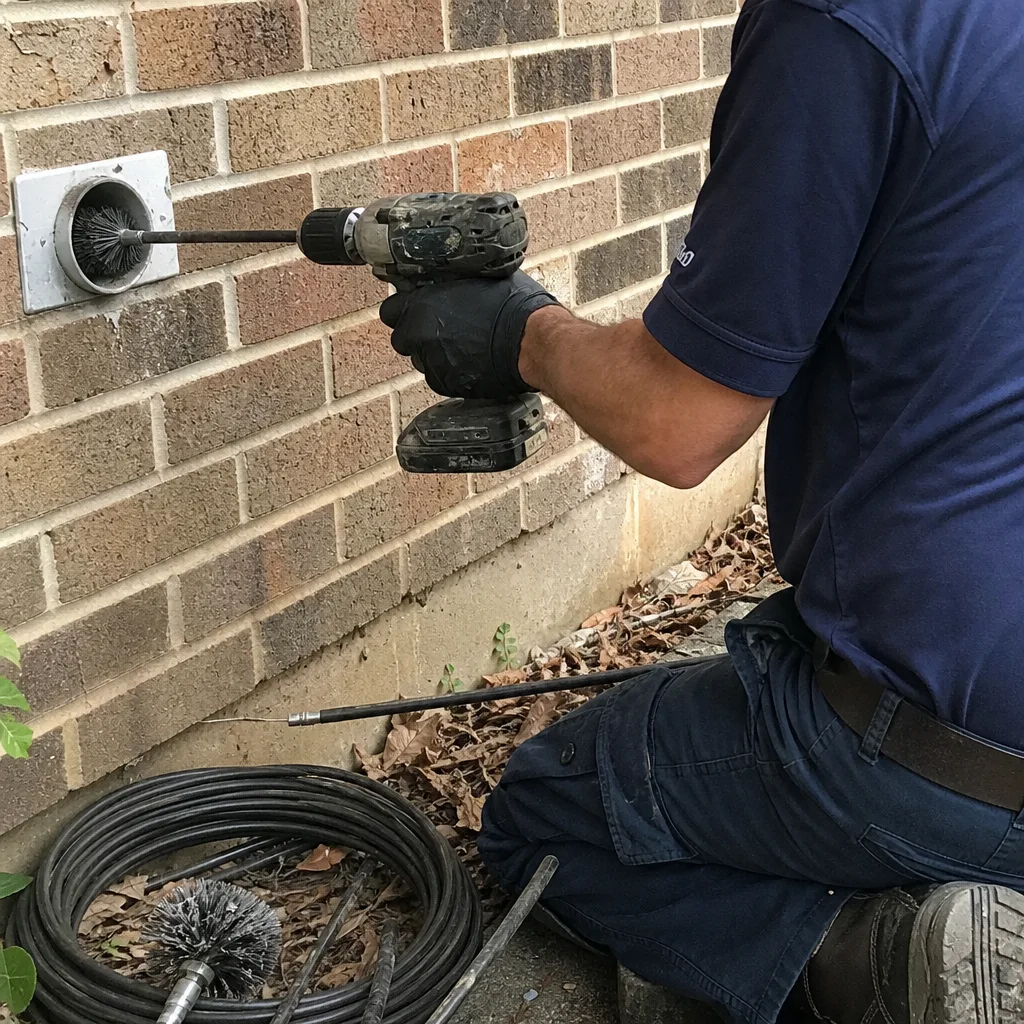
Honest pricing starts with honest scope. Here’s what whole-system cleaning costs in the Cumming market and what the price should cover.
| Home Size / System Type | Typical Run Count | Price Range | What’s Included |
|---|---|---|---|
| 1,200-1,800 sq ft, single system | 12-16 runs | $350-$550 | Full inventory, contact or negative-pressure cleaning per run, plenum cleaning, photo record |
| 1,800-2,800 sq ft, single system | 16-22 runs | $450-$750 | Full inventory, mixed-method cleaning as appropriate, plenum and air handler cabinet, photo record |
| 2,800-4,000 sq ft, single or dual system | 22-32 runs | $650-$950 | Full inventory, dual-system coordination, mixed methods, plenum, air handler, photo record, prioritized scheduling |
| Dryer vent cleaning (add-on or standalone) | 1 run | $125-$225 | Full vent run cleaning from dryer to exterior, airflow test, photo documentation |
These ranges reflect Cumming’s market specifically: labor costs in Forsyth County, travel distances for specialized equipment, and the documentation standards that separate professional work from coupon operations. Prices below $300 for whole-system cleaning indicate incomplete scope, undisclosed add-ons, or equipment that doesn’t reach past the first few feet of each run.
What “Per Vent” Pricing Hides
The $79 coupon model quotes per supply register, then charges separately for returns, plenums, “main trunks,” and “deep cleaning.” A homeowner who expected $79 pays $400+ once the truck is in the driveway. CleanRun’s pricing is flat per system, agreed in writing before work starts, based on the inventory count. No per-vent arithmetic. No surprise additions.
What’s Worth Paying Extra For
- Duct sealing with mastic: $200-$400 additional, depending on accessible joints. Essential if original tape is failing.
- Sanitizing treatment: Applied only after mechanical cleaning removes debris that would otherwise shield biological growth. Not a substitute for cleaning.
- Air handler deep cleaning: Evaporator coil, blower assembly, and drain pan. Often the dirtiest component in the system.
The HVAC Cleaning in Cumming page covers air handler service specifically. Many homeowners benefit from combining duct and HVAC cleaning in one visit with coordinated pricing.
Common Mistakes to Avoid
- Booking based on coupon price without written scope. The $79 special cleans 5 supply registers and stops. Your system has 20 runs. The math doesn’t work, and the company knows it.
- Assuming “cleaned” means “all runs cleaned.” Always ask for the run count in writing before work starts. Compare it to your home’s actual register count.
- Ignoring the return side. Return runs pull air from your living space; they’re often dirtier than supplies. A company that focuses only on supply registers is doing half a job.
- Accepting “trust us” instead of photos. Documentation is standard in 2024. A company without it has something to hide, or lacks the equipment to produce it.
- Cleaning without inspecting first. In Cumming’s 2000-2015 homes, failed duct tape and liner separation are common. Cleaning damaged ductwork can make it worse. The inspection should come first, with photos, and inform the scope.
- Scheduling duct cleaning after major renovation without containment. Construction dust resets the system immediately. Coordinate timing, or budget for repeat service.
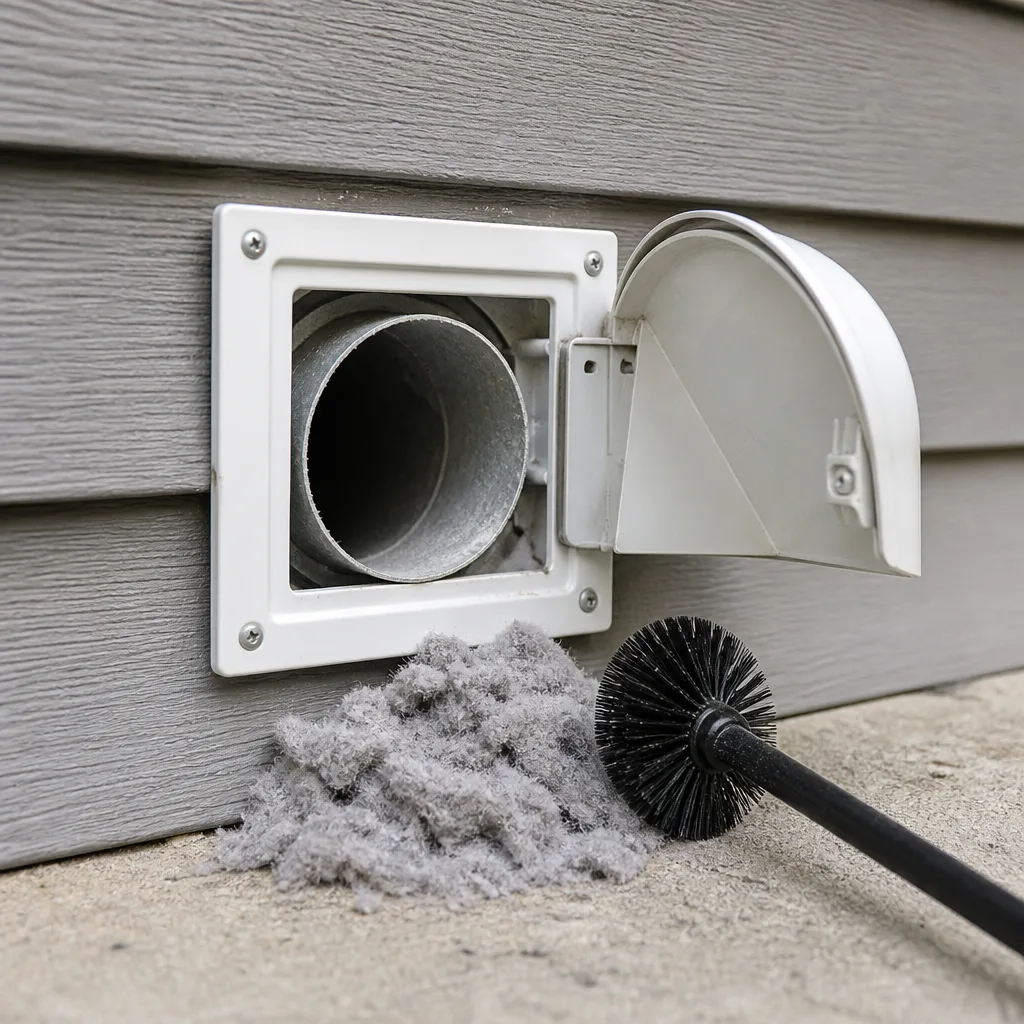
- Forgetting the dryer vent. A clogged dryer vent is a fire hazard and reduces dryer efficiency. Dryer Vent Cleaning in Cumming is often the more urgent service, and can be combined with duct cleaning for efficiency.
When to Call a Professional
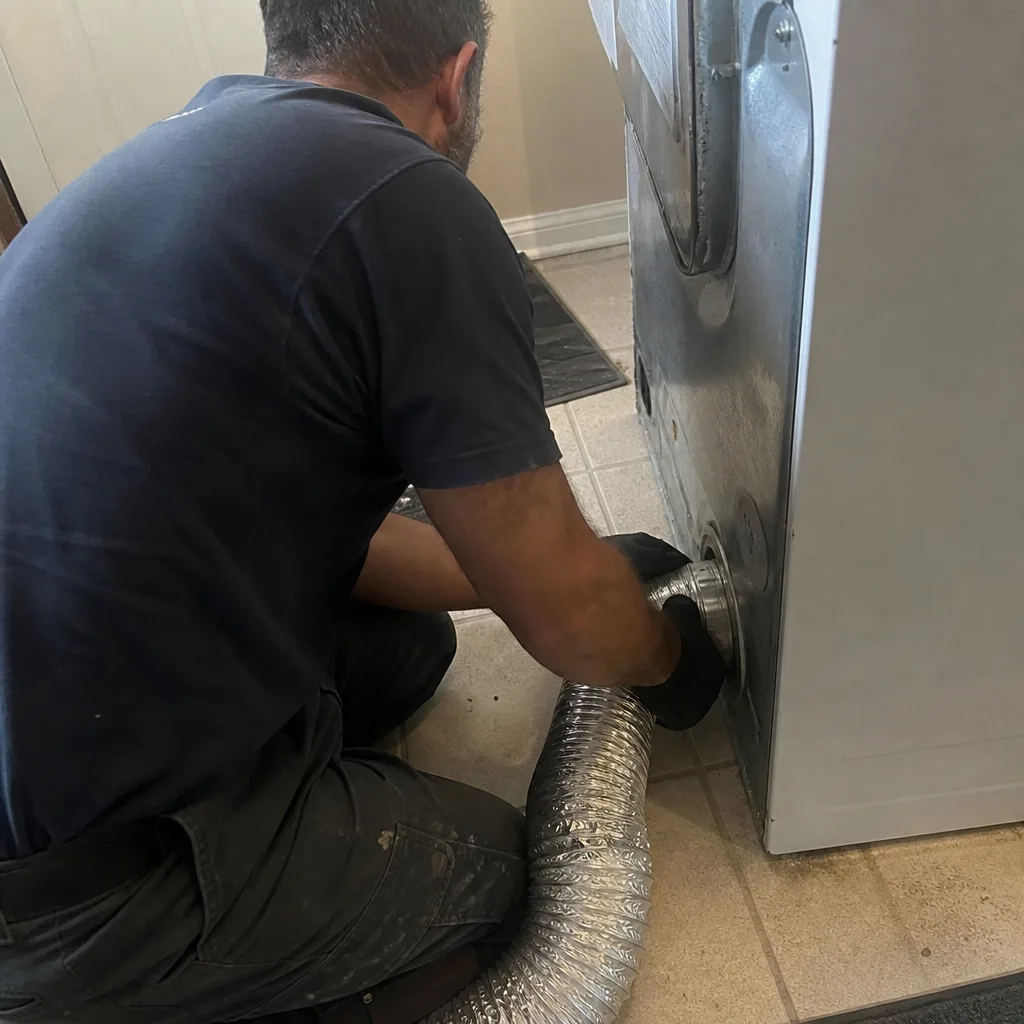
Call for inspection and likely cleaning if you notice visible dust emission from registers when the system starts, persistent dust accumulation that returns within days of surface cleaning, uneven heating or cooling between rooms, musty or chemical odors when the blower operates, or recent renovation work without duct containment. In Cumming’s climate, homes near active construction - and construction is ongoing throughout Forsyth County - should consider more frequent inspection schedules.
Call immediately if you suspect duct damage from water intrusion, pest infestation, or visible mold growth on register surrounds. These conditions may require repair or remediation beyond standard cleaning.
CleanRun Air Duct Cleaning Cumming offers free estimates in Cumming. A technician will inventory your system, photograph accessible components, and deliver a written price before any work begins. Call (678) 693-5322 to schedule.
Frequently Asked Questions
Whole-system air duct cleaning in Cumming typically costs $450 to $850 for homes between 1,800 and 2,800 square feet, with smaller homes starting around $350 and larger or dual-system homes reaching $950. The price should include a complete run inventory, the cleaning itself with appropriate equipment, and photographic documentation of every run. Call (678) 693-5322 for a written estimate specific to your home - estimates are free and carry no obligation.
The low quotes are almost always incomplete scope. A $79 or $99 special covers a small number of supply registers only, excludes returns and plenums, and uses portable equipment that doesn’t reach the full length of each run. The company recovers margin through upsells once inside your home. Honest pricing requires seeing the system first, counting the runs, and quoting the complete job in writing before work starts.
Demand a dated, location-stamped photo record showing the interior of every duct run before and after cleaning. The photos should match your home’s register locations and show clear improvement. CleanRun has delivered this documentation on every job since 2013; it’s standard practice, not a premium add-on. No photos means no proof.
For most Cumming homes, every 3 to 5 years with normal occupancy and standard filtration. Homes with pets, allergy-sensitive residents, recent construction, or located near active development may benefit from 2 to 3 year intervals. The camera inspection determines actual condition; calendar recommendations are starting points, not rules.
Moderately, if the system was significantly obstructed. The larger savings come from identifying and sealing leaks during the inspection process. Cumming homes with original 2000s-era duct tape frequently lose 20 to 30 percent of conditioned air to attics and crawl spaces. Cleaning alone doesn’t fix that; sealing does.
It depends on condition. Properly maintained flexible duct in good condition tolerates contact cleaning with correctly sized brushes. Duct that has been crushed, kinked, or exposed to high attic temperatures may be brittle. The pre-cleaning inspection with camera documentation determines whether cleaning is appropriate or replacement is recommended. Never allow aggressive cleaning without this assessment.
The Bottom Line
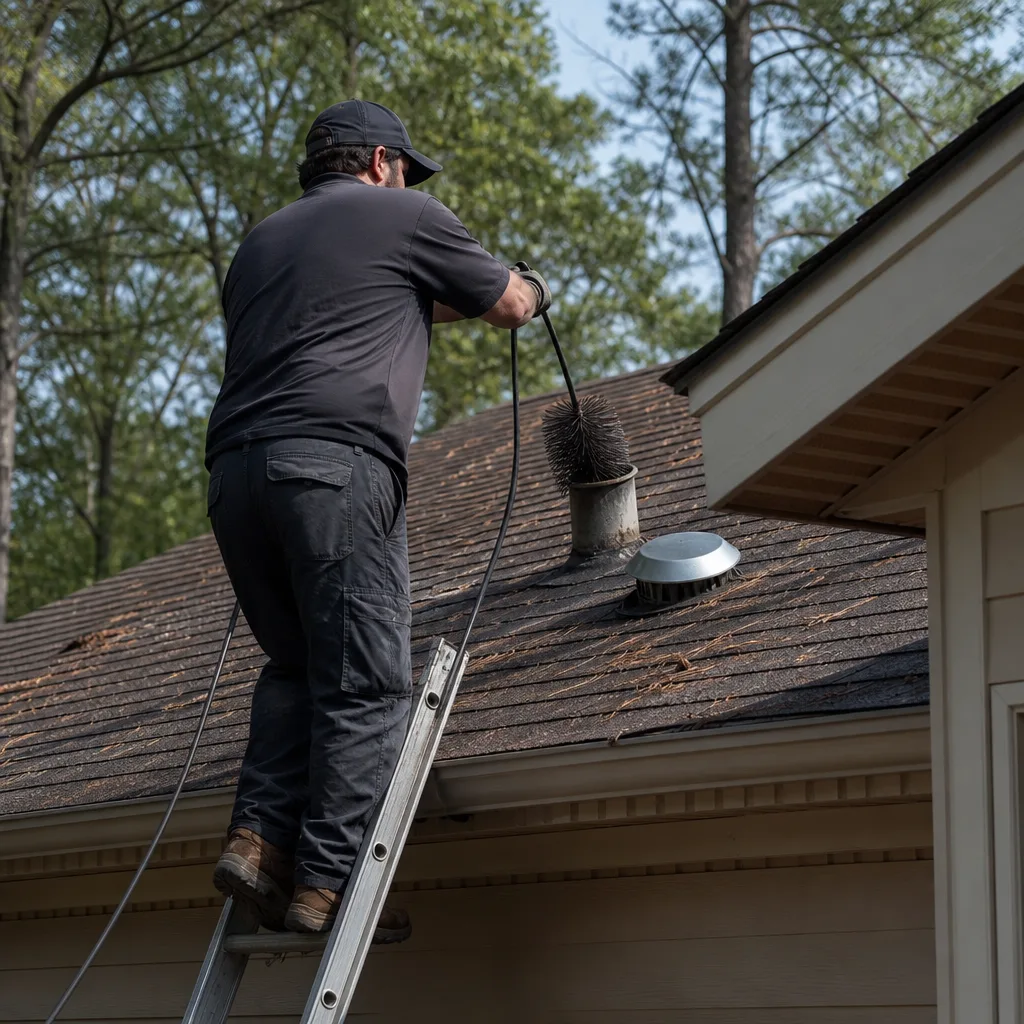
Air duct cleaning in Cumming is straightforward when you know what to ask for: a complete run inventory, the right cleaning method for your duct material, and photographic proof of work on every run. The industry’s reputation for bait-and-switch exists because most companies profit from customer confusion about scope. CleanRun’s approach - written price before work, documented photo record after, and the 365-Day Done Right Promise - exists to remove that confusion entirely. Evidence replaces promises. Documentation replaces trust. And the homeowner decides based on what they can see.
Written by Tomas Reyes, Owner at CleanRun Air Duct Cleaning Cumming, serving Cumming since 2013.