
Last updated September 23, 2026
Whole-system duct and dryer vent check with before-and-after photos - you see exactly what came out of your vents
That "$99 whole-house special" is a bait ad - the real number appears once they are in your hallway, or the "clean" is a shop-vac at the register. We photograph the inside of your ducts before and after instead.
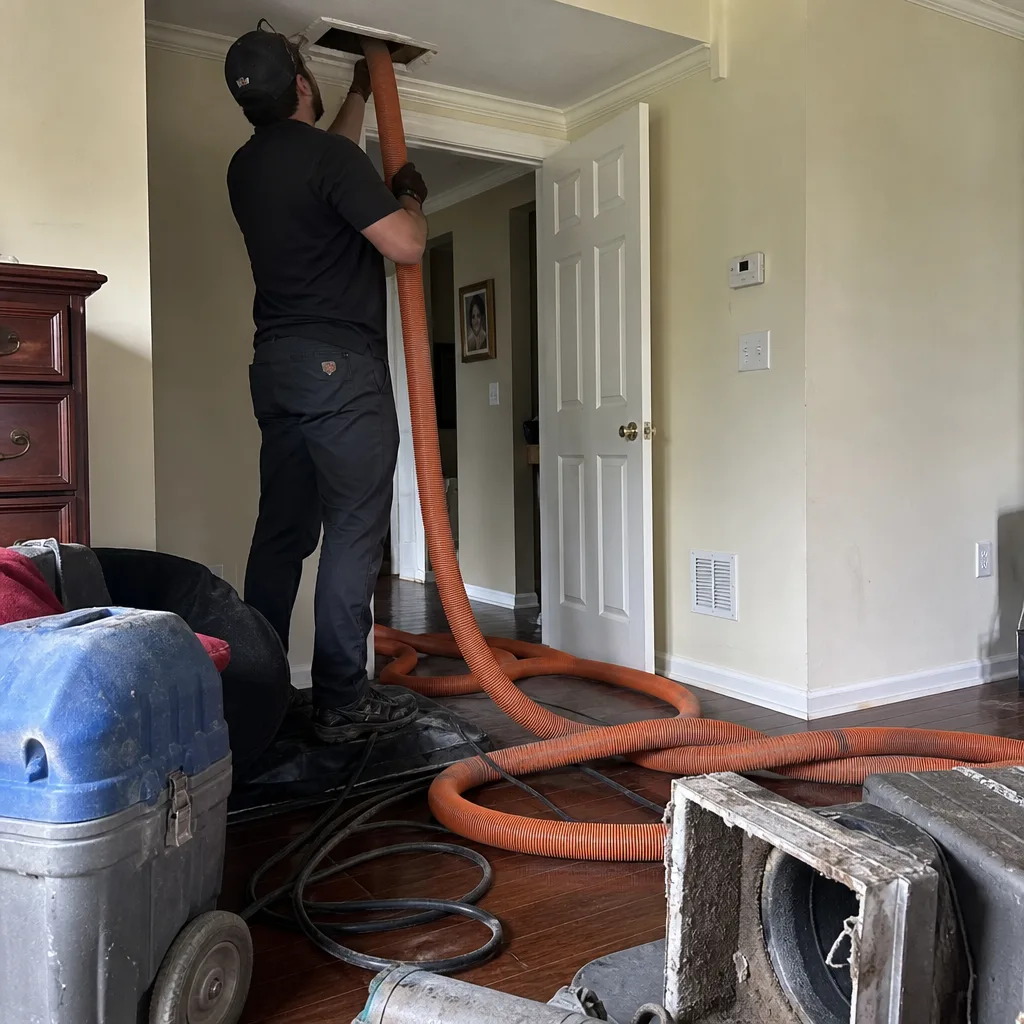 Before
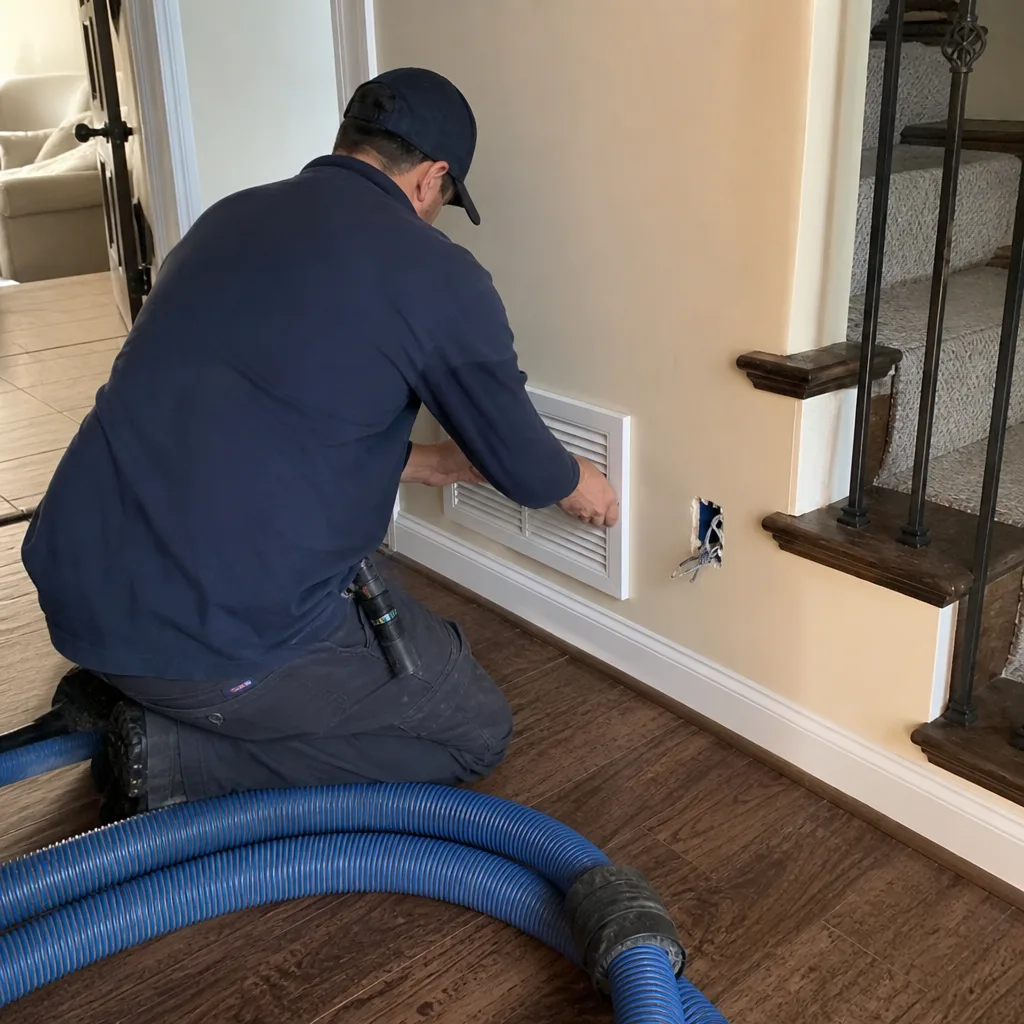 After
After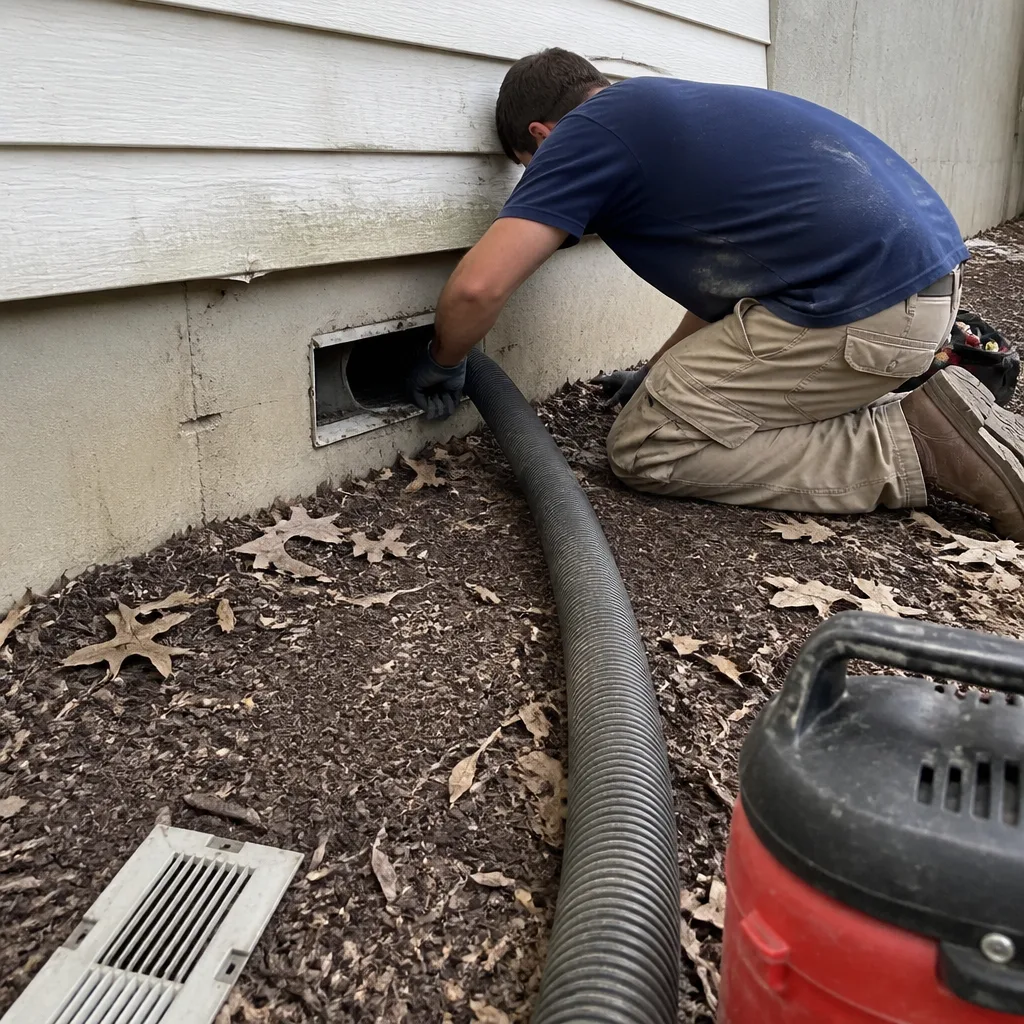 Before
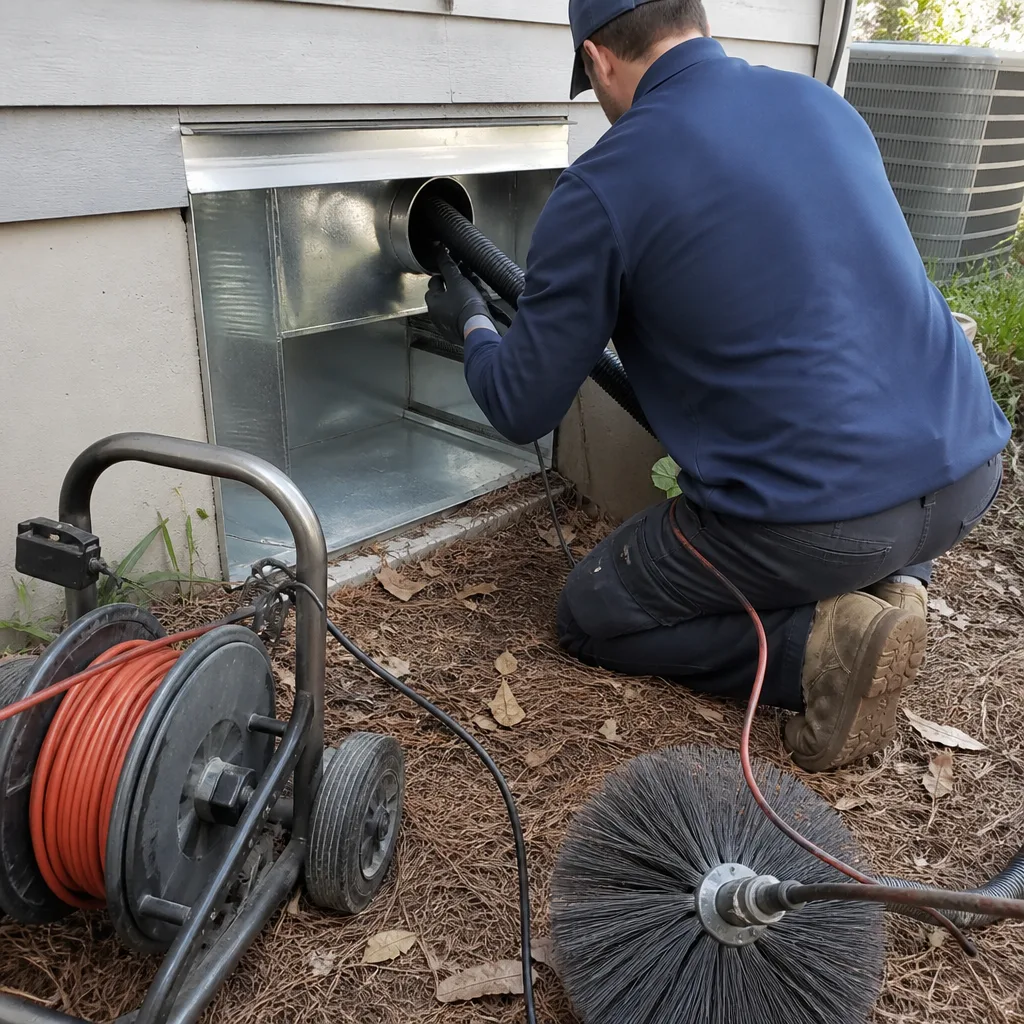 After
After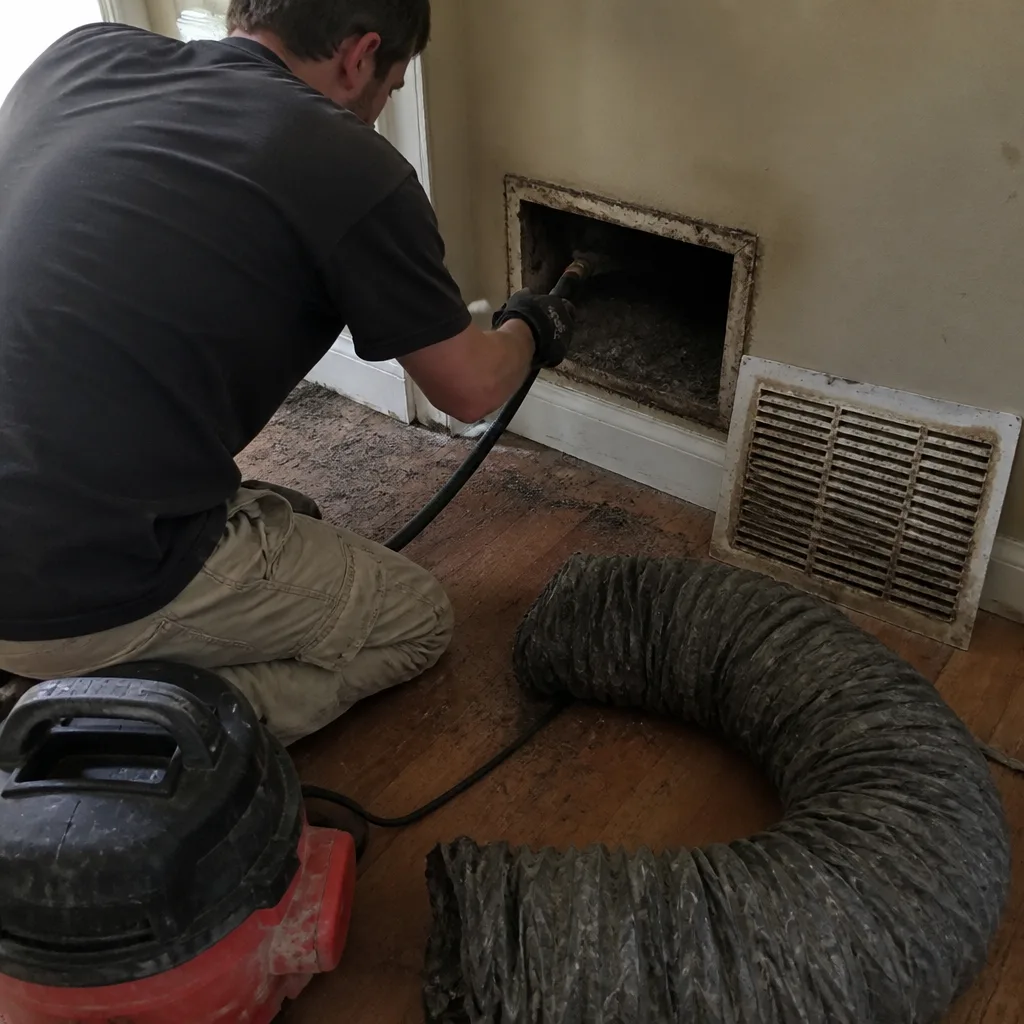 Before
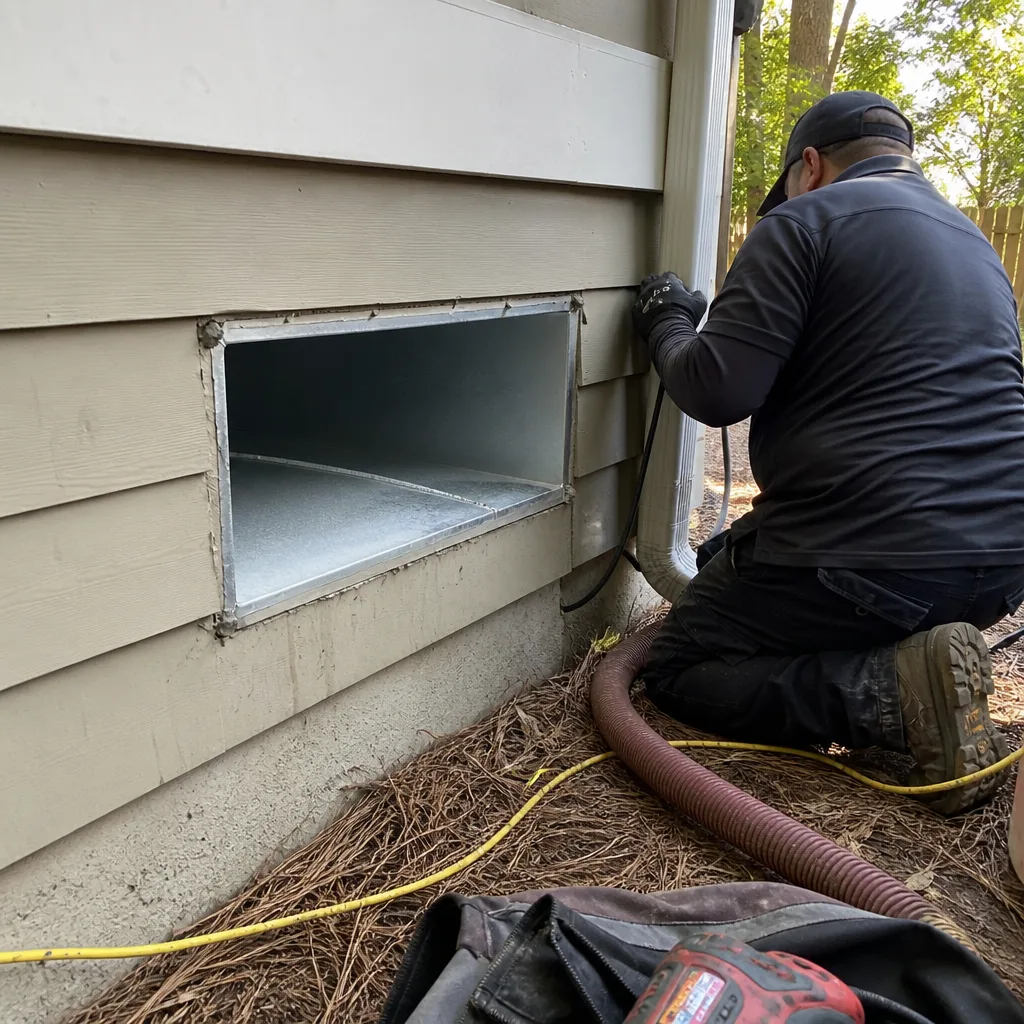 After
AfterDIY vs Professional Air Duct Cleaning: The Cumming Homeowner’s Decision Guide
A standard shop vacuum generates roughly 60 CFM of suction. A truck-mounted duct cleaning system pulls 3,000 to 5,000 CFM. That single number explains why most DIY duct cleaning in Cumming homes redistributes debris rather than removes it. In this guide, we’ll walk through exactly which duct maintenance tasks a homeowner can handle with consumer tools, which conditions make DIY attempts actively harmful, and what professional Air Duct Cleaning equipment and documentation actually deliver for the price. If you’re researching before calling anyone, you’re already ahead of most homeowners.
Quick Answer
Homeowners in Cumming can safely handle three narrow tasks: dryer vent cleaning with a rotary brush kit, washing register grilles, and vacuuming accessible return grilles. Everything beyond that boundary - full duct run cleaning, plenum access, debris extraction from deep trunk lines - requires negative-pressure containment equipment, rotary contact tools, and camera verification that consumer tools cannot replicate. Professional service in this market runs $400-$750 for a whole-system clean with documented before-and-after photos.
Table of Contents
- What DIY Can Actually Do: The Honest Boundary
- The Equipment Gap: Why CFM and Containment Matter
- When DIY Makes Things Worse
- What Professional Duct Cleaning Actually Includes
- Cost Comparison: Real DIY Math for a Cumming Home
- The Documentation Argument: Photos, Warranties, and Resale
- Cumming Climate Factors That Affect Duct Condition
- Common Mistakes to Avoid
- When to Call a Professional
- Frequently Asked Questions
BeforeAfterWhat DIY Can Actually Do: The Honest Boundary
Consumer tools have their place. We’ve been in enough Cumming homes to recognize when a homeowner has done legitimate maintenance versus when they’ve spent an afternoon making noise. Three tasks fall within the honest DIY boundary.
1. Dryer Vent Cleaning (The One Worth Doing Yourself)
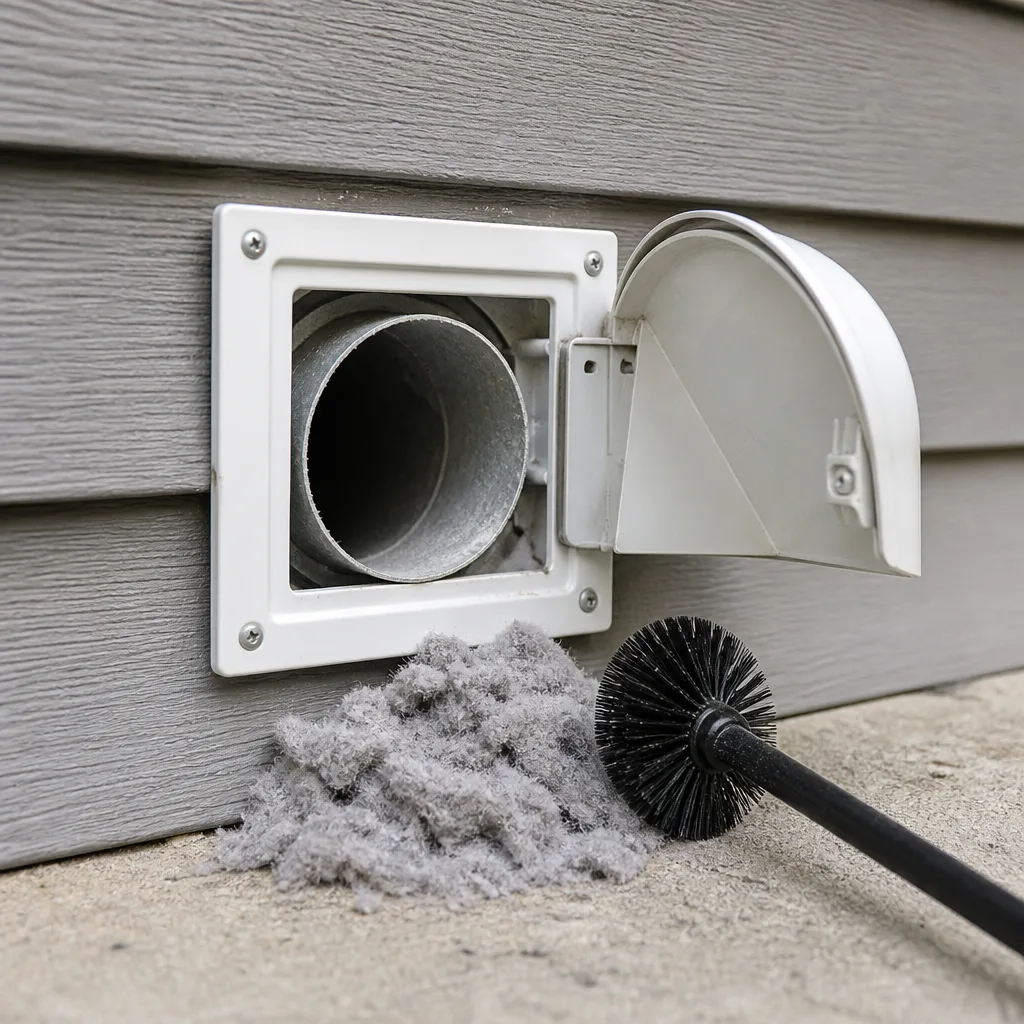
A $40-$80 rotary dryer vent brush kit with flexible rods can clear lint buildup from the exterior vent cap back to where the flex hose meets the wall. This matters in Cumming’s humid subtropical climate, where lint compacts with moisture and creates genuine fire risk. The task is straightforward because the duct run is short, straight, and accessible. Run the brush until resistance clears, vacuum the discharge, and check that the exterior flap moves freely.
Where DIY dryer vent cleaning stops: if your vent run exceeds 25 feet, passes through multiple bends, or terminates on the roof. In those configurations, a rotary brush can compact lint at elbows or detach in the run. That’s when Dryer Vent Cleaning in Cumming with professional-grade Nikro or Rotobrush equipment becomes the safer path.
2. Register Grille Washing
Remove floor or wall registers, soak them in warm water with mild detergent, scrub with a soft brush, and let them dry completely before reinstalling. This removes surface dust and cooking grease that accumulates on the visible portion. It does not clean the duct behind the register, but it improves appearance and removes a dust source that otherwise recirculates.
3. Accessible Return Grille Vacuuming
The return grille and the first few inches of duct behind it collect the most visible debris. A household vacuum with a brush attachment can remove this surface layer. Remove the grille, vacuum the visible surfaces, and replace. Stop at any point where you cannot see or comfortably reach.
That’s the complete list. Every other duct cleaning task - trunk line debris removal, plenum cleaning, supply run contact cleaning, evaporator coil access - requires equipment that cannot be rented at a Cumming Home Depot for a Saturday project.
The Equipment Gap: Why CFM and Containment Matter
Understanding why DIY fails requires understanding what professional equipment actually does. The gap isn’t about brand names or truck logos. It’s about physics.
Negative-Pressure Containment
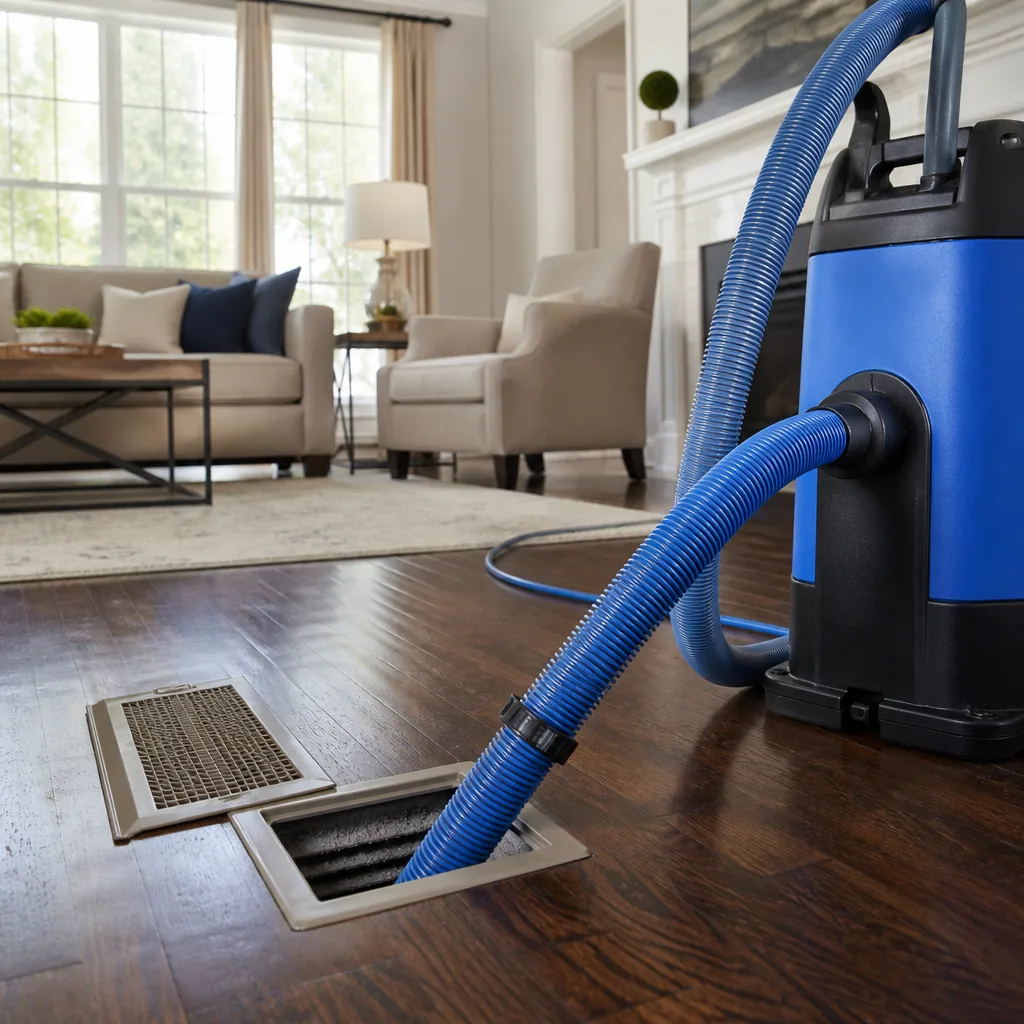
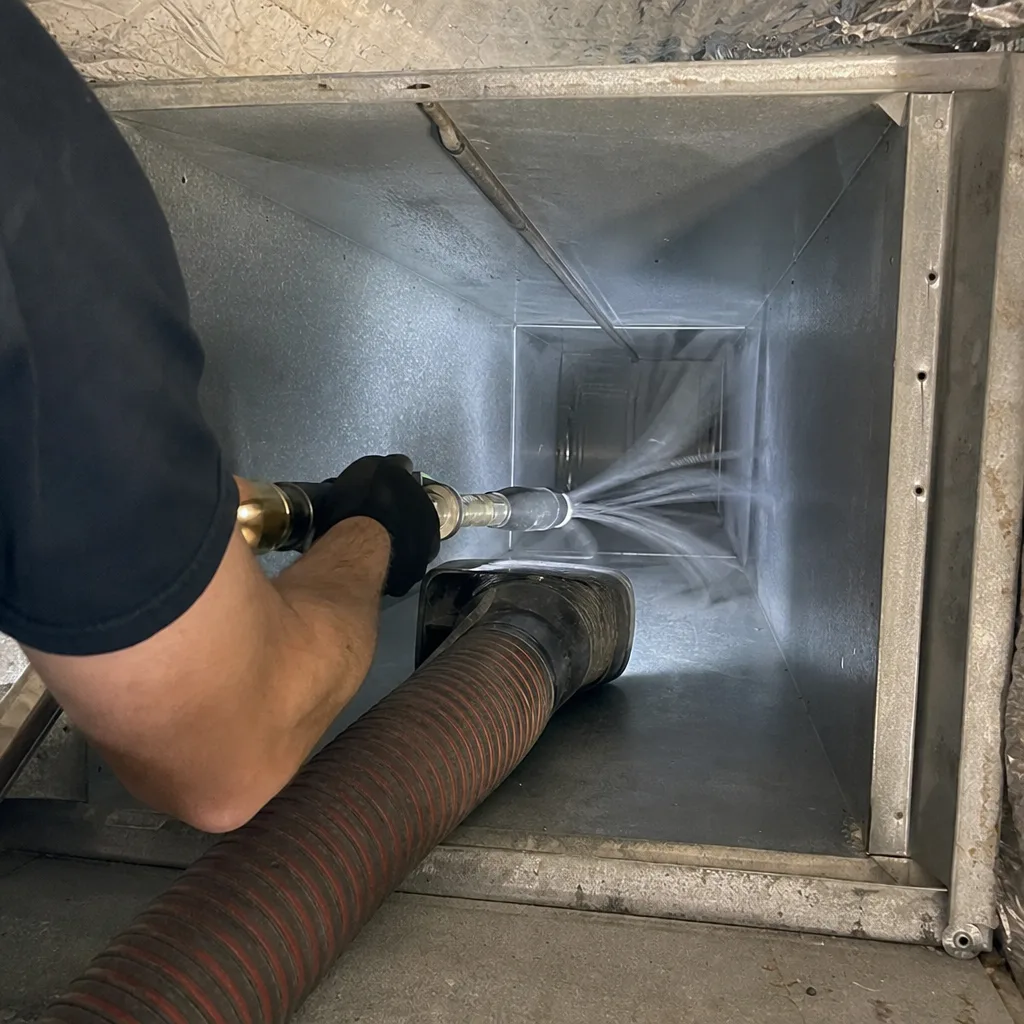
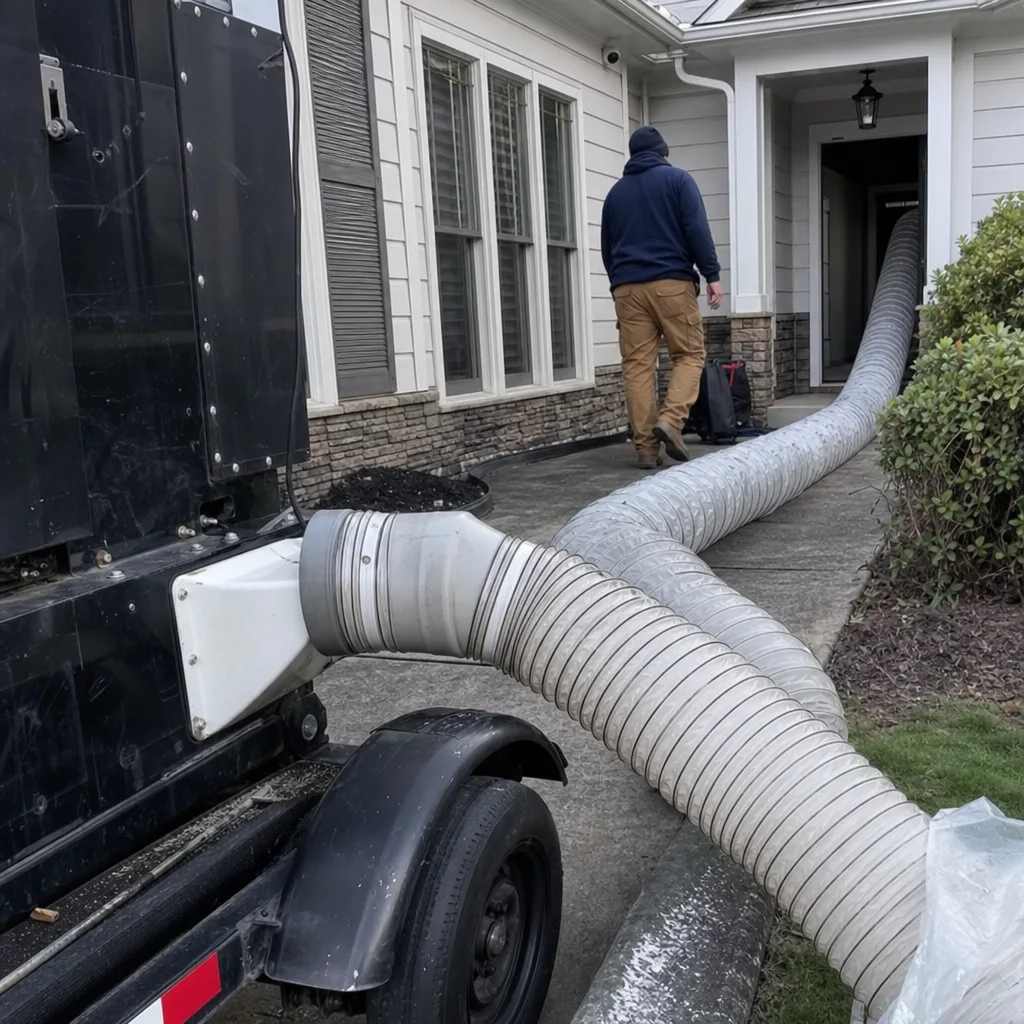
Professional duct cleaning operates under negative pressure. A large vacuum unit, typically mounted on a truck or portable unit from Abatement Technologies or Nikro, attaches to the duct system near the air handler. This creates suction throughout the entire network. Then, agitation tools - rotary brushes, air whips, or compressed-air skip balls - are inserted into individual duct runs to dislodge debris. The dislodged material is immediately captured by the airflow and contained in the vacuum’s filtration system.
A shop vac cannot create negative pressure across a whole duct system. It can only suction at the point of contact. When a homeowner pushes a brush into a duct run without containment, dislodged debris falls past the brush, resettles downstream, or gets blown into the living space through open registers. The register looks cleaner. The system is not.
Rotary Contact Cleaning at Distance
Professional rotary brush systems, like those from Rotobrush, use flexible shafts that extend 20, 30, or 50 feet into duct runs with powered brush heads that maintain contact with all duct surfaces. The brush diameter matches the duct dimension. Consumer dryer vent brushes are too narrow for most supply ducts and too short for most trunk lines. They touch only the bottom surface, if that, and leave the majority of the interior untouched.
Camera Verification
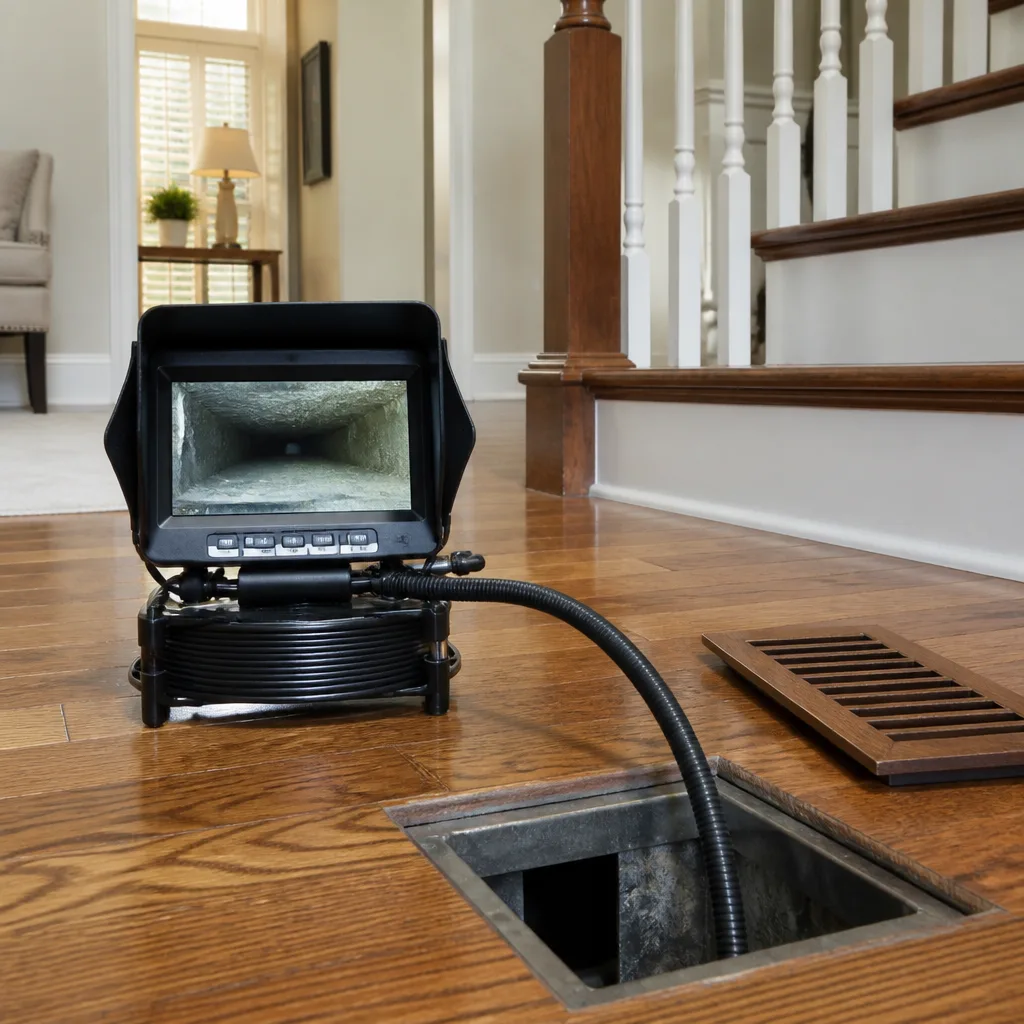
After agitation and extraction, professional crews use duct cameras to verify that debris has been removed. The customer sees the result. This verification step is impossible with consumer tools because there’s no way to inspect the full length of a duct run without a borescope camera and the access points to use it.
In our work across Cumming, from the older ranch homes near Coal Mountain to the newer construction in Vickery Village, we’ve documented the difference repeatedly. A homeowner’s two-hour effort with a shop vac produces visible register dust removal. A professional system with negative-pressure extraction, rotary contact tools, and camera verification produces measurable debris removal from every duct run in the system.
When DIY Makes Things Worse
Some conditions make DIY duct cleaning not merely ineffective but actively damaging. We’ve repaired the aftermath in Cumming homes where well-intentioned efforts created new problems.
Flex Duct with Inner Liner Tears
Many Cumming homes built between 1995 and 2010 use flex duct with a plastic inner liner and fiberglass insulation wrap. This liner becomes brittle with age. A rotary brush or even a stiff manual brush can tear the liner, exposing fiberglass to the airstream and creating leaks that reduce system efficiency. Once torn, flex duct requires replacement or professional repair with mastic and proper support. The damage is often out of sight, in an attic or crawl space, and goes undetected until airflow problems or indoor air quality complaints surface.
Debris Loads That Break Loose but Don’t Get Captured
Homes near Cumming’s active construction zones - and there are many, with development continuing along GA-400 and toward Forsyth County’s northern corridor - often have significant construction debris in ducts. Loose drywall dust, sawdust, and insulation fragments sit in trunk lines. A homeowner’s brush disturbance breaks this material loose. Without negative-pressure containment, it distributes through the system and into living spaces. We’ve arrived at jobs where the homeowner’s “cleaning” attempt left every room dustier than before.
Dislodged Obstructions
Toys, construction debris, or pest nesting material can lodge in duct runs. DIY attempts to push these obstructions free can wedge them more tightly or damage dampers. Professional equipment includes extraction tools designed to capture or retrieve obstructions without forcing them deeper.
Mold Disturbance Without Containment
In Cumming’s humid climate, duct systems with moisture intrusion can develop mold growth on duct interiors. Disturbing mold without containment and proper filtration spreads spores through the system. Professional mold remediation in ducts requires HEPA containment, negative pressure, and often antimicrobial treatment with EPA-registered products. This is not a consumer task under any circumstances.
What Professional Duct Cleaning Actually Includes
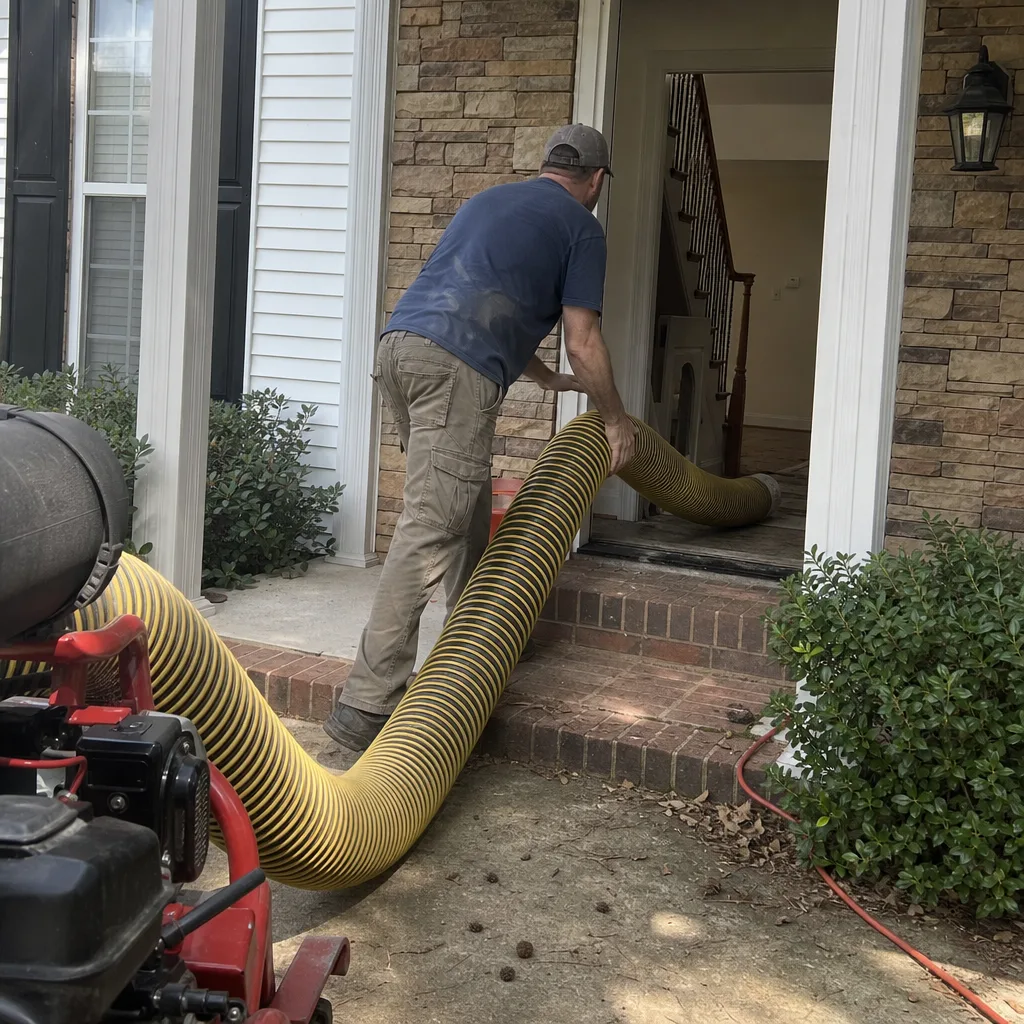
A professional whole-system cleaning follows a sequence that consumer tools cannot replicate. Here’s what the process looks like when done to trade standard.
- System inspection and access creation. The technician examines the duct layout, identifies access points, and creates sealed entry ports where needed. This includes the plenum - the central distribution box connected to the air handler - which is the hub of the entire system.
- Negative-pressure vacuum attachment. A large-diameter hose connects to the duct system, typically at the plenum or a main trunk line. The vacuum runs continuously during cleaning, maintaining suction across all connected ducts.
- Register sealing and zone isolation. Registers are sealed to force suction through the duct being cleaned. The system is cleaned one zone at a time to maintain adequate airflow velocity for debris capture.
- Agitation and contact cleaning. Rotary brushes, air whips, or compressed-air tools are inserted into each duct run. The tool makes contact with all interior surfaces, dislodging adhered debris. The debris is immediately drawn into the negative-pressure stream.
- Plenum and air handler cleaning. The plenum interior, blower compartment, and evaporator coil (if accessible) are cleaned. These components affect airflow and air quality as much as the ducts themselves.
- Camera verification. A duct camera inspects representative runs to confirm debris removal. The technician documents condition with before-and-after photography.
- System restoration and final test. Access ports are sealed, registers are reinstalled, and the system is run to verify normal operation.
At CleanRun Air Duct Cleaning Cumming, this sequence is performed with equipment from Rotobrush, Nikro, and Abatement Technologies - brands any customer can research independently. Every job concludes with a Documented Photo Record of every duct run, delivered as part of the standard job record. This practice has been in place since our first job in 2013.
The Air Duct Cleaning in Cumming page details our full scope for homeowners who want specifics on what’s included in a whole-system clean.
Cost Comparison: Real DIY Math for a Cumming Home
Homeowners often assume DIY saves money. The math depends on what you’re actually trying to accomplish and what honest accounting includes.
DIY Cost for Legitimate Tasks
| Task | Tools/Materials | Approximate Cost | Time Required |
|---|---|---|---|
| Dryer vent cleaning (straight run) | Rotary brush kit, vacuum | $40-$80 | 1-2 hours |
| Register grille washing | Bucket, detergent, brush | $15-$25 | 2-3 hours |
| Return grille vacuuming | Household vacuum | $0 | 30 minutes |
DIY Cost for Attempted Full-System Cleaning
Some homeowners attempt more ambitious cleaning. Here’s what that actually costs:
- Shop vacuum rental or purchase: $80-$300 for adequate capacity
- Extension hoses and brush attachments: $50-$150
- Borescope camera for inspection: $60-$200 for consumer-grade
- HEPA filtration upgrade (recommended if disturbing duct debris): $100-$250
- Personal protective equipment: $30-$60
- Your time: 6-10 hours for a typical 2,000-square-foot Cumming home
Total realistic DIY investment for a full-system attempt: $320-$960 and a full weekend. The result, based on every post-DIY inspection we’ve performed: surface dust removal at registers, minimal impact on trunk lines, no documentation of what was or wasn’t accomplished, and no recourse if air quality doesn’t improve.
Professional Cost in Cumming
Whole-system air duct cleaning in the Cumming market, performed with documented methodology and professional equipment, typically runs:
| Home Size / System Complexity | Price Range |
|---|---|
| Small home (1,200-1,800 sq ft), single system | $400-$550 |
| Medium home (1,800-2,800 sq ft), single system | $500-$650 |
| Large home (2,800-4,000+ sq ft), dual system or complex layout | $650-$750 |
These are whole-system prices, agreed in writing before work starts under Haven Standard Clause 1. No per-vent pricing. No add-on surprises. The price includes the Documented Photo Record, the 365-Day Done Right Promise, and the full equipment deployment described above.
Factor in time value, and professional service costs less than the DIY attempt for anything beyond the three narrow tasks. More importantly, it produces a documented result.
The Documentation Argument: Photos, Warranties, and Resale
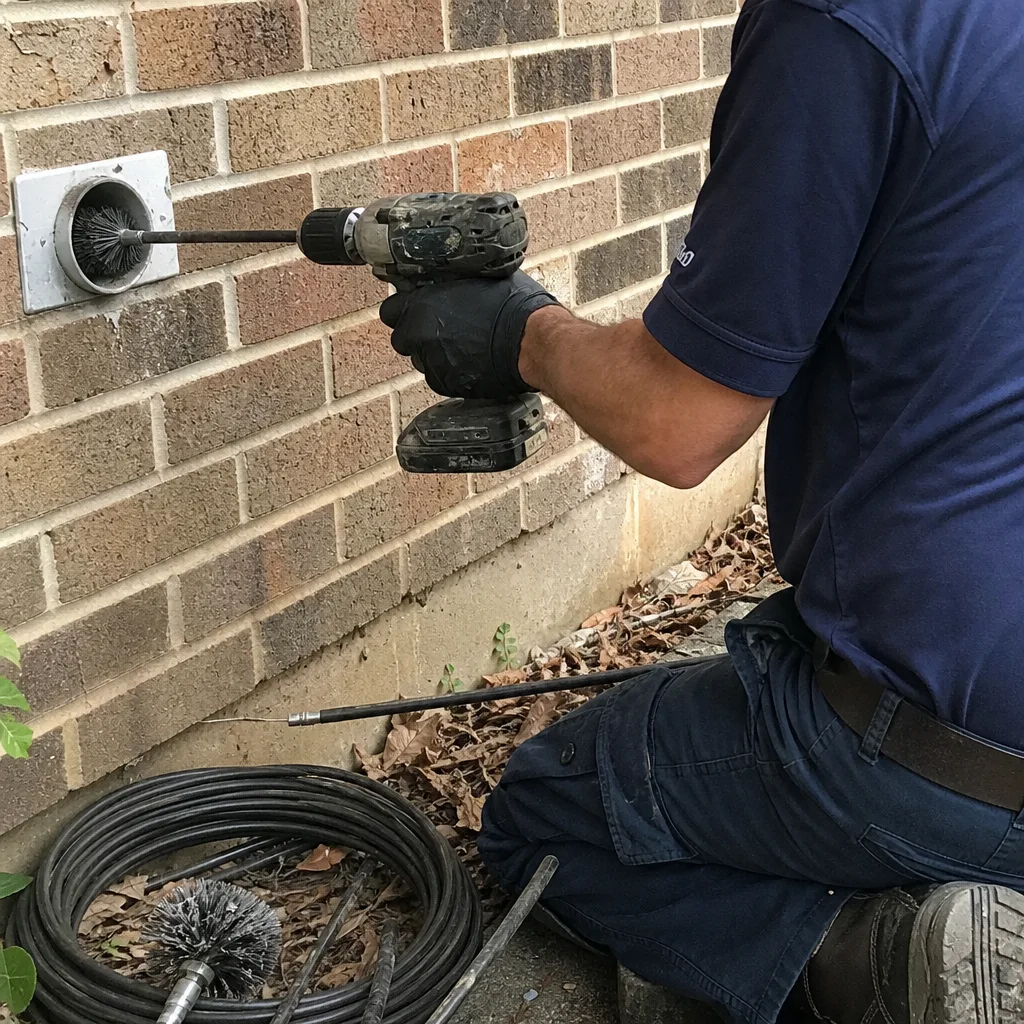
Even if a homeowner could rent equipment matching professional capability - and they cannot - one gap remains impossible to close: documentation.
The Photo Record as Proof of Work
Every CleanRun job delivers a Documented Photo Record showing the interior of every duct run before and after cleaning. The customer receives this as part of the standard job record. This isn’t marketing language. It’s a concrete deliverable you can forward to a home inspector, include in a seller’s disclosure, or reference if air quality issues arise later.
DIY cleaning produces no comparable record. A year later, you have your memory and perhaps a photo of a dusty vacuum filter. That doesn’t demonstrate what was cleaned, what condition it was in, or whether the work affected system performance.
Warranty and Accountability
The 365-Day Done Right Promise means that if the work is not right, CleanRun makes it right. This is a written guarantee, not a policy subject to manager approval. DIY work has no warranty. If you damage flex duct, disturb mold, or fail to improve air quality, you absorb the cost of remediation.
Resale and Home Inspection Context
Cumming’s real estate market moves quickly in desirable neighborhoods like Vickery Village, Windermere, and the Polo Fields area. Buyers in these markets are informed and often request maintenance documentation. A professional duct cleaning record with dated photos demonstrates proactive maintenance. “I cleaned them myself last year” does not.
In our experience, the documentation gap is the deciding factor for homeowners who intend to stay in their home long-term as well. You want to know what condition your ducts are in, whether cleaning improved them, and what to expect next time. Professional service with photo documentation provides that baseline. DIY cannot.
Cumming Climate Factors That Affect Duct Condition
Local conditions in Cumming and Forsyth County create specific duct maintenance needs that DIY approaches don’t address.
High Humidity and Microbial Growth Risk
Cumming’s average relative humidity exceeds 70% for much of the year. Duct systems with any air leakage can draw humid attic or crawl space air, creating condensation on cool duct surfaces. This moisture supports microbial growth that a brush alone won’t remove. Professional cleaning includes inspection for moisture sources and, when indicated, antimicrobial treatment with EPA-registered products from manufacturers like Honeywell or Aprilaire.
Pollen and Outdoor Debris Load
Forsyth County’s tree cover is extensive, and pollen seasons are intense. Homes with fresh air intakes or leaky return ductwork in vented attics pull significant pollen loads into the system. This material compacts in duct runs and requires the agitation force of professional tools to dislodge.
New Construction Debris
Homes built in Cumming’s ongoing development areas - along Kelly Mill Road, near the Forsyth County airport corridor, and north toward Coal Mountain - frequently have construction debris in ducts from the build process. Drywall dust, insulation fragments, and sawdust sit in trunk lines for years. This material is often beyond the reach of consumer tools and requires negative-pressure extraction with adequate CFM to remove.
Seasonal Temperature Swings
Cumming’s temperature range, from summer highs near 90°F to winter lows in the 20s, causes duct materials to expand and contract. This stress creates separations at joints and tears in flex duct. Professional inspection during cleaning identifies these integrity issues. DIY cleaning can worsen them.
Common Mistakes to Avoid
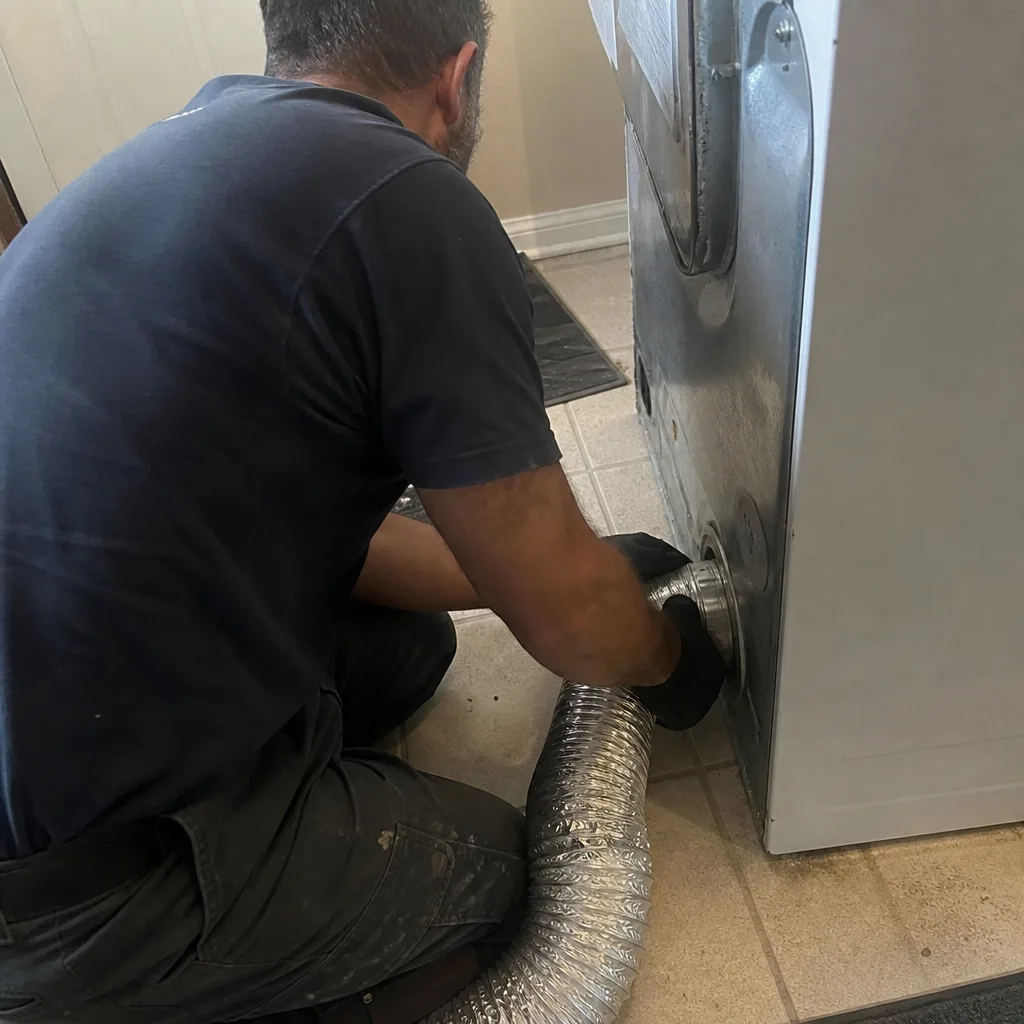
- Using a standard vacuum without HEPA filtration on duct debris. This blows fine particulate through the vacuum exhaust and back into your living space. In Cumming’s humid climate, this debris settles and can support mold growth on surfaces.
- Brushing flex duct with stiff or oversized brushes. The inner liner tears easily, creating leaks that reduce system efficiency and expose fiberglass to the airstream. We’ve replaced flex duct in homes near downtown Cumming where this damage went undetected for years.
- Cleaning registers but ignoring the plenum. The plenum is the distribution hub. If it’s dirty, cleaned supply runs immediately recontaminate. Consumer tools cannot access or properly clean this component.
- Disturbing mold without containment. If you see dark staining or smell mustiness from ducts, stop. Disturbing mold without negative-pressure containment and HEPA filtration spreads spores throughout the system and home.
- Assuming a clean register means clean ducts. Registers are the visible tip. The trunk lines and plenum hold the majority of system debris. We’ve photographed duct runs in Cumming homes with spotless registers and half-inch debris buildup at the first elbow.
- Using compressed air without extraction. Blowing debris loose without simultaneous suction simply redistributes it. This is the most common DIY error we encounter.
When to Call a Professional
Call a professional when any of the following apply: your home has flex duct more than 15 years old; you’ve never had ducts cleaned and moved into a home built before 2015; you smell mustiness or see visible mold near registers; your system has reduced airflow or uneven heating and cooling; you’re preparing a home for sale and want documented maintenance; or you’ve attempted DIY cleaning and air quality hasn’t improved. See How to Hire a Air Duct Cleaning Contractor in Cumming: A Step-by-Step Guide for help choosing the right company.
CleanRun Air Duct Cleaning Cumming offers free estimates in Cumming. Every estimate includes a written price before any work starts, every time, under Haven Standard Clause 1. There’s no “call for a quote” - the number is (678) 693-5322, and you’ll speak with a live person who can schedule a technician to inspect your system and deliver a written scope.
Frequently Asked Questions
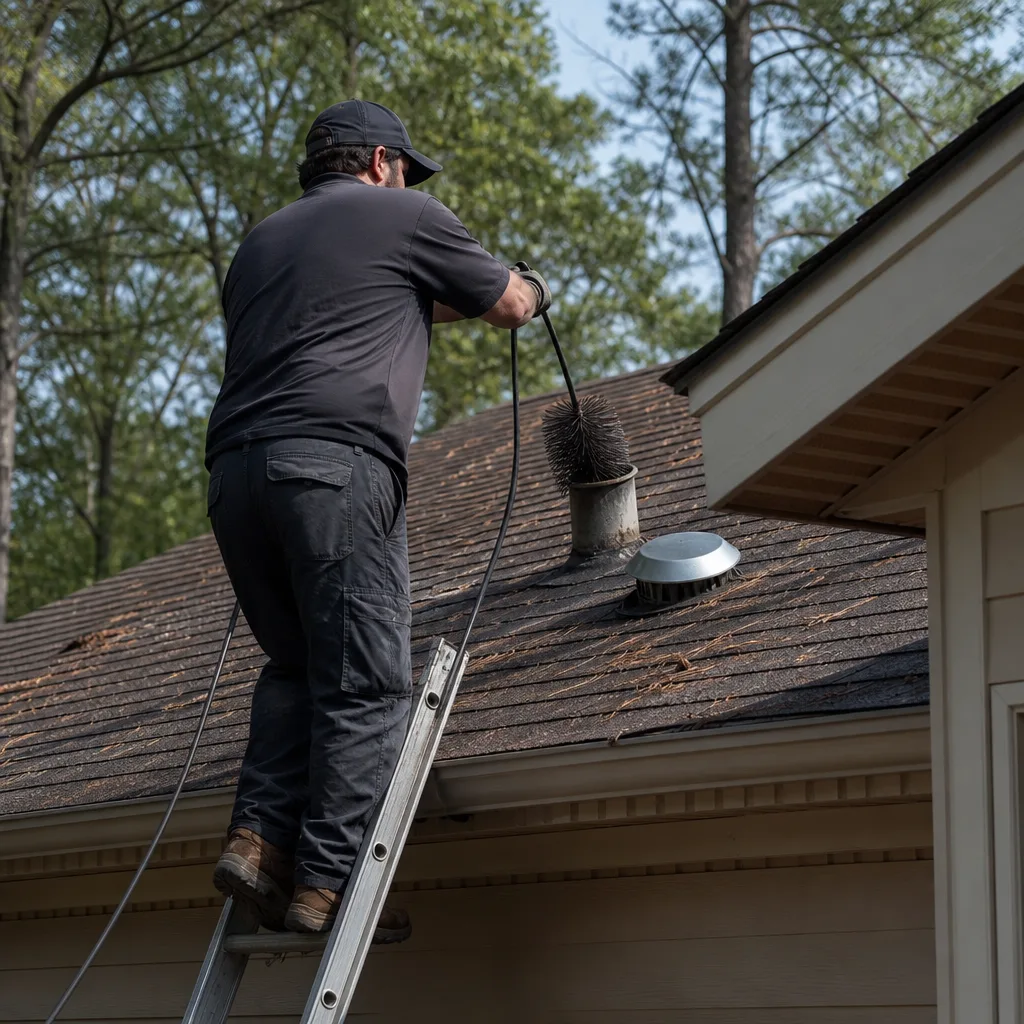
Whole-system air duct cleaning in Cumming typically costs $400-$750 depending on home size and system complexity. A single-system home under 2,000 square feet usually falls in the $400-$550 range. CleanRun provides a written price before any work starts - no per-vent pricing, no add-ons after arrival. Call (678) 693-5322 for a free estimate with exact pricing for your home.
Low quotes typically rely on shop-vacuum-only service, minimal time on site, and no documentation. The $79-$149 coupon model often involves a brief vacuum at registers with no trunk line cleaning, no photo record, and aggressive upselling once the technician arrives. A legitimate whole-system clean with negative-pressure extraction, rotary contact tools, and camera verification cannot be performed at those prices. Always ask what equipment will be used, what specific components will be cleaned, and whether you’ll receive before-and-after documentation.
Demand a photo record showing the interior of duct runs before and after cleaning. At CleanRun, this is standard on every job - Haven Standard Clause 1 requires written pricing, and our practice since 2013 has included photographing every duct run. If a company cannot or will not show you internal duct photos, you have no verification that cleaning occurred beyond the visible registers.
For most Cumming homes, every 3-5 years is adequate. Homes with pets, recent renovations, or residents with allergies may benefit from more frequent service. The pollen load in Forsyth County and ongoing construction dust in newer developments can accelerate debris accumulation. A documented photo record from your last cleaning lets you compare condition and time the next service appropriately.
A shop vacuum can remove surface dust from accessible return grilles and the first few inches of duct behind them. It cannot create the negative pressure needed to extract debris from trunk lines, nor can it agitate adhered material from duct walls. For the three narrow tasks outlined in this guide, consumer tools suffice. For whole-system cleaning, the equipment gap is insurmountable.
It can. Many HVAC manufacturer warranties require professional maintenance and specifically exclude damage from consumer modifications or cleaning attempts. If your DIY effort tears flex duct, damages dampers, or disturbs components near the air handler, related repairs may not be covered. Check your warranty terms before attempting any internal system work.
The Bottom Line
The DIY versus professional question for duct cleaning is not about homeowner capability. It’s about equipment access and documentation. A rotary dryer vent brush and a shop vacuum handle three narrow tasks well. Everything else - trunk line debris extraction, plenum cleaning, flex duct integrity, mold containment, and verified results - requires professional-grade negative-pressure systems, rotary contact tools, and camera documentation. In Cumming’s climate, with its humidity, pollen loads, and active construction, ducts accumulate debris that consumer tools cannot reach. The cost difference between a realistic DIY attempt and professional service narrows considerably when time, equipment, and risk are honestly accounted. The documentation gap never closes: only professional service produces a photo record, a written warranty, and a baseline for future comparison.
Written by Tomas Reyes, Owner at CleanRun Air Duct Cleaning Cumming, serving Cumming since 2013.